
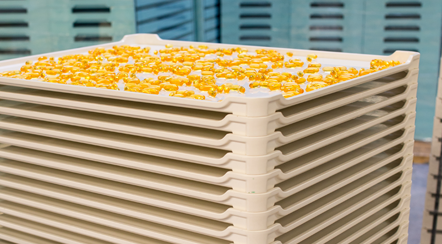
Gel cap drying trays are a component in producing softgel capsules. While their primary function seems straightforward—providing a uniform surface for drying and protecting softgels—these trays have applications across various industries.
This article delves into significant gel applications of cap drying trays in manufacturing and highlights their key features. Understanding these applications and design elements is important in grasping their full use scope.
Quick Takeaways
- Manufacturers use gel cap drying trays for various filling types and delivery methods in softgel production.
- Industries utilizing these trays include pharmaceuticals, CDMOs, health supplements, and alternative medicine manufacturers.
- Specially designed gel drying trays offer improved airflow, easy stacking, and FDA compliance.
Filling Types in Gel Cap Manufacturing
First up, we’ll take a look at the different filling types of gel caps that can be used with these drying trays.
Application #1: Liquid-Filled Capsules
Liquid softgels are the most common gel caps, and the drying tray plays a large role in their production. These trays provide a stable surface for drying the outer gelatine layer, ensuring the capsules maintain their shape. Additionally, they serve as a protective barrier, shielding the liquid contents from external factors that could compromise the integrity of the capsule.
Drying trays feature innovative designs to address the specific needs of liquid-filled capsules. Their smooth surfaces eliminate hot spots, preventing capsules from marking and sticking. This design consideration is important for liquid softgels, as their contents make them susceptible to damage during drying.
Application #2: Solid or Semi-Solid Filled Capsules
Some soft gels contain solid or semi-solid substances, which present challenges such as:
- Powdered substances that may be difficult to handle
- Highly viscous materials with properties of both solids and liquids
- Accommodating potential weight differences and ensuring uniform drying
Specially designed trays with contoured edges and rounded corners prevent moisture or residue accumulation, which is crucial for maintaining the quality of solid and semi-solid filled capsules.
Delivery Types
The active ingredients contained within the softgel may be delivered to the patient in different ways. This will have an impact on the manufacturing and the drying process.
Application #3: Oral Delivery
Oral-delivery gel caps dominate the market due to their ease of use and effectiveness. These capsules are swallowed whole, with their gelatine envelope breaking down in the stomach. The capsules may be flavored to make the process of taking the medication or the supplement even easier.
Manufacturers specifically engineer modern drying trays to optimize the production process for oral delivery capsule.
The capsules are dried in a gel cap drying tray for a set amount of time, achieving the right consistency and texture for the product. The drying process determines these capsules’ final consistency and texture, directly impacting their quality and efficacy. Featuring innovative designs with drop sides and ends, these trays promote improved airflow, ensuring faster drying. Drying efficiency enhances product quality and increases manufacturing productivity, making these trays a great tool for producing oral-delivery gel caps.
Application #4: Anal and Vaginal Delivery
Some medicated softgels may be designed as anal suppositories or as vaginal pessaries. The capsule is inserted into the user’s body according to the usage directions, and the gelatine envelope is broken down, releasing the active ingredients into the bloodstream. The gelatine envelope will be unflavored, and the consistency of the gelatine may be different from that of oral delivery caps – this may necessitate a different timeframe for drying, but manufacturers will still use drying trays for the process.
Application #5: Topical Delivery
Topical delivery softgels are chiefly used for pharmaceutical products like medications rather than health supplements. These gel capsules are designed with a twist-off tab, which opens the gel envelope ready for direct delivery of the active ingredients. Pediatric medical professionals may use this option with small children who find it difficult to take regular topical medicines.

Topical delivery softgels present challenges in the manufacturing process. Their more complex construction may impact drying time and require consideration during production. To address these challenges, specially designed drying trays are employed. These trays feature smooth, non-porous surfaces that allow for easy cleaning. This design preserves the properties of topical soft gels throughout the drying process.
Application #6: Non-Animal Based Capsules
Whether due to personal lifestyle choices or medical allergies, many users will not be able to take traditional gelatine-based softgels. For this, a non-animal-based gelatine substitute will be used, requiring its own dedicated drying tray to avoid contamination with animal products. To cater to various dietary restrictions and allergies, manufacturers produce non-animal-based softgels:
- Use plant-based or synthetic gelatine substitutes
- Require dedicated drying trays to prevent cross-contamination
- May have different drying characteristics compared to traditional gelatine capsules
FDA-compliant drying trays ensure these specialized capsules meet regulatory requirements throughout manufacturing.
Industry Types
Many different industries use softgel capsule drying trays as part of their regular operations. The trays are an important asset as companies seek to achieve efficient and effective production methods, reducing costs while improving the yield of the process.
Application #7: Pharmaceutical Manufacturing
Companies operating in the pharmaceutical industry utilize soft gel drying trays to prepare their products for consumption by patients. These organizations are highly regulated in terms of dosage consistency and product viability, so the drying trays must be carefully monitored to ensure each capsule is up to standard. As a result, the trays used in pharmaceutical production must meet high standards of cleanliness and durability.
To meet these requirements, pharmaceutical manufacturing employs specially designed trays. Manufacturers produce these trays using sophisticated technologies and high-grade materials, ensuring they can withstand the demands of pharmaceutical production.
Application #8: CDMO Operations
CDMO stands for contract development and manufacturing organization. These businesses typically work with pharmaceutical manufacturing organizations, improving the capacity and efficiency of these organizations by handling key elements of the production chain. Many CDMOs are involved in the development of softgels and will use gel cap drying trays to prepare these capsules for distribution. If they are working within the pharma industry, they will be bound by the same rules and regulations as the mainstream pharmaceutical manufacturers themselves.
Contract Development and Manufacturing Organizations (CDMOs) play a significant role in soft gel production:
- Often handle key elements of the production chain for pharmaceutical companies
- Must adhere to the same regulations as mainstream pharmaceutical manufacturers
- Require versatile drying trays to accommodate various client needs
Modern drying trays’ durability, stackability, and resistance to distortion and warping make them ideal for the high-volume production often seen in CDMO operations.
Application #9: Health Supplement Manufacturing
Health supplements are not medications. Instead, they are used to provide additional vitamins and minerals that the end user may not be getting from their normal diet. As such, supplements are not regulated quite so strictly as pharmaceutical products, largely because the side effects associated with their ingestion are less severe. However, health supplements are still under the jurisdiction of the Food and Drug Administration (FDA), and so the drying process – and the cap drying trays used – still need to be monitored closely.
To address these specific requirements, gel cap drying trays for the supplement industry come with specialized features. Notably, these trays are available in multiple colors, which aids in easy inventorying and identification. This color-coding system is crucial for managing the diverse product lines typical in supplement manufacturing, enhancing efficiency and reducing the risk of mix-ups in production.
Application #10: Alternative Medicine Production
Alternative medicines sit somewhere between pharmaceutical products and health supplements. In the USA, it is not permitted to list products as ‘drugs’ if they have not been certified as such by the scientific and medical community, and so most alternative medicines will not be marketed as pharma products.
Alternative medicine manufacturers occupy a unique space in the market, with regulations falling between those for pharmaceutical products and health supplements. While not marketed as drugs, the FDA still administers these products. This position requires drying trays that can accommodate diverse formulations and ingredients, reflecting the varied nature of alternative medicine products.
Modern drying trays meet the needs of alternative medicine production. Their versatility, including their ability to function across a wide temperature range, makes them suitable for the processes involved in alternative medicine manufacturing.
Choosing the Right Gel Cap Drying Tray
The appropriate gel cap drying tray is important for efficient and effective production. Key factors to consider include:
- Material durability and cleanliness standards
- Compatibility with different soft gel sizes and shapes
- Specific design features like improved airflow and stackability
- Compliance with relevant regulations, such as FDA guidelines
Manufacturers work to offer a range of gel cap drying trays designed to meet the diverse needs of the soft gel manufacturing industry.
Make the Right Choice with Chemtech
Gel cap drying trays are essential in soft gel production across various industries, from pharmaceuticals to supplements, ensuring product quality and efficiency. Modern trays, featuring improved airflow, easy stacking, and FDA compliance, enhance manufacturing processes. As the demand for soft gel grows, the importance of these specially designed trays will continue to increase.
By choosing fitting gel cap drying trays, companies can optimize their production processes, ensure product quality, and meet regulatory requirements. For more information on gel cap drying trays and how they can benefit your manufacturing process, contact Chemtech today!
About Author

Neel Daphtary
Neel Daphtary is the President of Chemtech International. He oversees sales, distribution and business development. He excels at helping pharmaceutical and manufacturing firms find the right processes and environmental solutions. Neel is an active member of Global Philadelphia, an organization committed to community development in PA.





Have Any Questions Or Comments?
Call Us For Help!
888-709-8070