
In 2012, the EPA pulled diazinon from approved use on mushroom farms. For decades, it had been the primary chemical control for phorid flies. When it went, so did the most reliable tool most growers had in their arsenal, and the flies did not take long to notice.
Since then, phorid fly populations across Pennsylvania’s Kennett Square area have grown exponentially year over year. A whopping 60% of all US mushrooms are grown in this 250 square mile stretch. Hundreds of farms in close proximity mean the flies always have a nearby food source, and they move freely between operations. Individual farms are now reporting losses of 10 to 40% of mushroom crop yields per room from unchecked infestations.
Mushroom farm operators, growing room managers, and agricultural pest management teams handling commercial mushroom facilities are dealing with a pest that took advantage of a regulatory gap and has been growing ever since. The approach that works now is biological, and understanding why requires starting with the fly itself.
What Are Phorid Flies and Why Do Mushroom Farms Attract Them?

Phorid flies (Megaselia halterata) are approximately 0.125 inches long, half the size of a fruit fly, with a distinctive humpback profile and an erratic running and hopping behavior that distinguishes them from other small farm flies.
They are commonly confused with sciarid flies (fungus gnats), but that distinction matters for control: the two species respond to different treatments, and applying sciarid-targeted methods to a phorid fly infestation produces poor results.
Mushroom farms attract phorid flies because gravid females specifically seek out compost with well-established mycelial growth for egg laying. Research from Penn State’s Mushroom Fly Research Team confirms that females actively avoid laying eggs where mycelium is sparse or absent. The warm, humid, dark conditions inside commercial growing rooms provide ideal conditions for all four life stages: egg, larva, pupa, and adult.
Adult flies are short-lived; at temperatures above 75°F, they survive no more than three days. But a single female lays enough eggs in that window to sustain rapid population growth across successive crop cycles, particularly in operations where growing rooms run back-to-back without sufficient downtime.
How Does a Phorid Fly Infestation Damage Mushroom Crops?
Phorid fly damage operates through two mechanisms simultaneously, which is why unchecked infestations compound so quickly.
Direct Feeding on Mushroom Mycelia: Larvae feed exclusively on mushroom mycelia, the root-like structures that the entire crop depends on for development. Larval tunneling through compost reduces mycelial density, depresses pin formation, and cuts harvestable yield per flush. Unlike adult flies, which are a nuisance but cause no direct crop damage, the larvae are where the economic harm actually happens.
Disease Vectoring Across Growing Rooms: Adult and larval movement carries fungal pathogens, including Lecanicillium dry bubble disease, between compost beds and across rooms. Both adults and larvae serve as vectors as they move through ventilation systems, doorways, and shared equipment. A phorid fly infestation that starts in one room rarely stays confined to it, which is why the yield losses tend to be facility-wide rather than isolated.
Why Is Phorid Fly Pest Control So Difficult on Mushroom Farms?
Three factors combine to make phorid fly pest control genuinely harder than most agricultural pest management situations.
Chemical options are severely restricted. Diazinon was the primary effective pesticide and is no longer available for this application. Remaining registered chemicals offer limited efficacy against phorid flies specifically, and mushroom facilities face additional restrictions due to food safety and harvest residue requirements.
Population dynamics work against the grower. At growing room temperatures, phorid fly populations can move from manageable to overwhelming within a single crop cycle. The fast reproductive rate means a delay in intervention compounds rapidly.
Farm proximity creates a shared pest pool. In areas like Kennett Square, Pennsylvania, hundreds of farms operate within close range of each other. Even well-managed individual operations face consistent reinfestation pressure from neighboring farms, making farm-level control insufficient without a sustained program.
How to Get Rid of Phorid Flies on Mushroom Farms – What Works in Practice
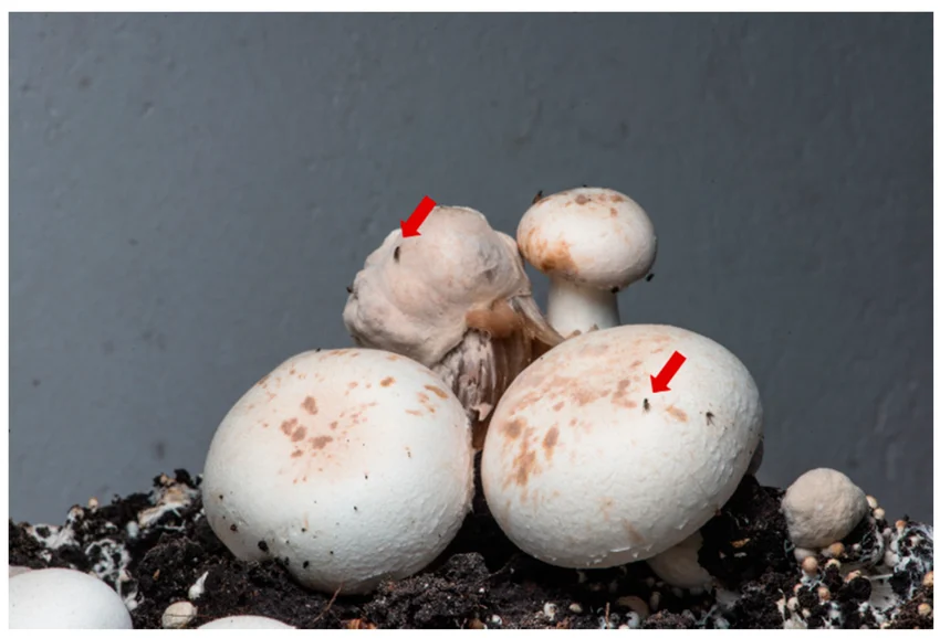
Effective phorid fly pest control at the farm level requires an integrated approach. No single method controls the population alone.
1. Steam Treatment Between Crop Cycles
Raising growing room temperatures to 140°F (60°C) or above for several hours kills all life stages, including eggs and larvae. The Pennsylvania Department of Agriculture now mandates steaming in established quarantine zones. Steam treatment controls existing populations effectively, but does not prevent reinfestation from surrounding farms; it is a reset, not a sustained program.
2. Physical Exclusion
Sealing growing rooms, screening ventilation points, and controlling personnel and equipment movement between rooms prevents adult fly entry and limits cross-room spread. Penn State research is also trialing insecticide-impregnated netting around growing room entrances, showing significant adult fly reduction in early field applications.
3. Biological Phorid Fly Control with Bti
Bacillus thuringiensis israelensis (Bti) is a naturally occurring soil bacterium that produces crystal proteins specifically toxic to dipteran larvae, the larval stage of phorid flies. Applied to compost and casing layers at key points in the production cycle, Bti kills phorid fly larvae before they develop into egg-laying adults. It is safe for mushroom mycelium, non-toxic to humans and animals, leaves zero chemical residue on harvested mushrooms, and carries none of the regulatory restrictions that chemical alternatives face.
How Does Bti Work as a Phorid Fly Killer?
BTi targets larvae, not adults. That distinction determines whether the application works.
Adult phorid flies lay eggs in compost with established mycelial growth. When eggs hatch, larvae ingest Bti spores and crystal delta-endotoxin proteins present in the treated substrate.
Inside the larval gut, the alkaline environment activates the toxin, which destroys the gut lining, larvae stop feeding, and die within hours. Adult flies are unaffected by Bti, which makes timing relative to the crop cycle critical.
That leads us to the question – what’s the best time to actually apply the Bti?
Apply at the spawn run before casing to target early larval populations in compost before they establish. Apply again at the casing layer to intercept newly hatched larvae at the point of highest density. During peak infestation risk periods, repeat applications every four to five days to maintain effective larval suppression through the most vulnerable phases of the growing cycle.
Compatibility matters here. Bti should not be combined with chlorine applications, as sodium or calcium hypochlorite can reduce Bti efficacy. For operations using CIP or surface sanitation protocols, the timing and sequencing of Bti application relative to sanitation cycles affect performance.
Microbe-Lift Bti – The Biological Phorid Fly Killer for Mushroom Farms
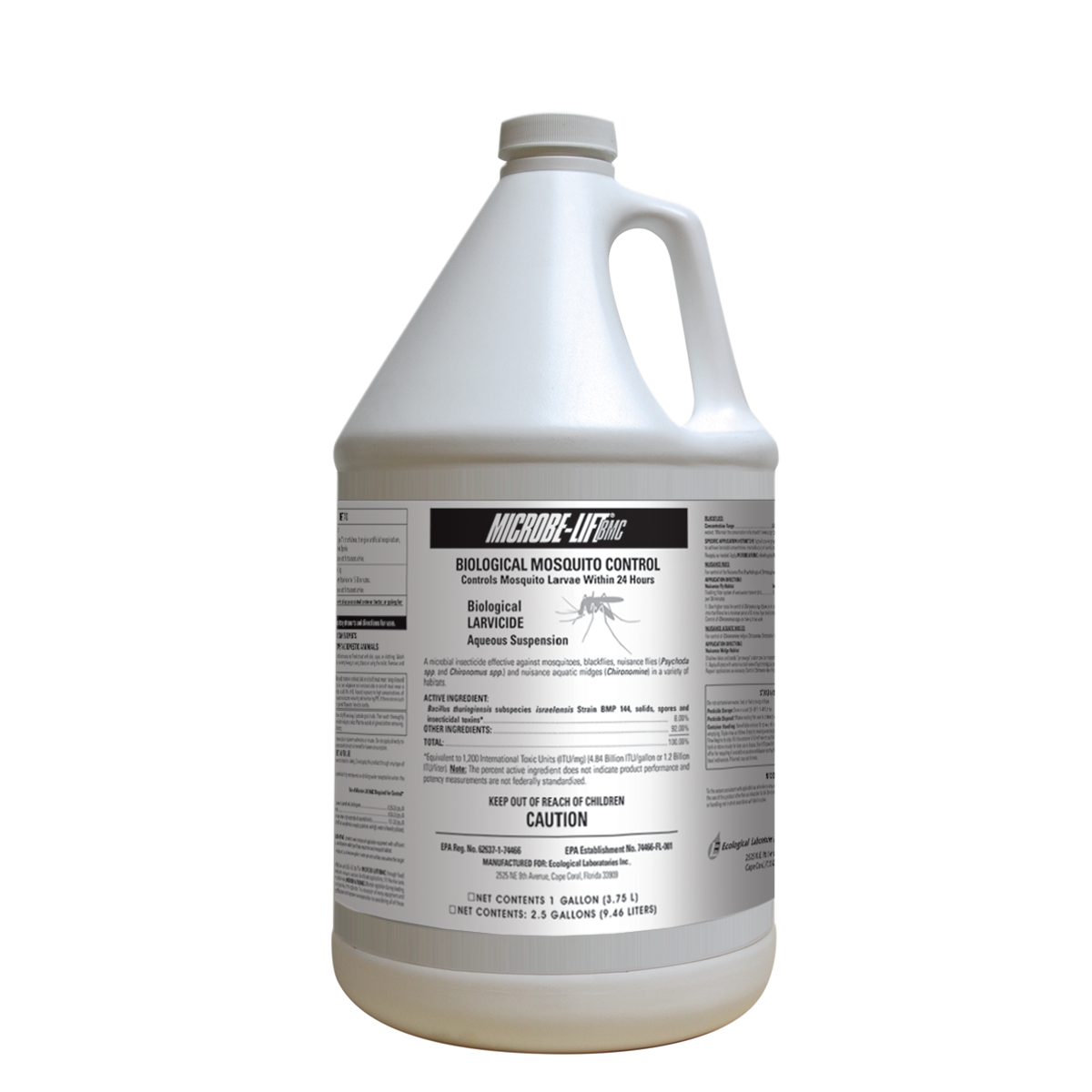
A concentrated liquid Bti formulation designed specifically for commercial mushroom farm application. Targets phorid fly larvae and sciarid fly larvae in compost and casing layers across the growing cycle.
Safe for mushroom mycelium, fish, wildlife, plants, and humans, while not having any harvest restrictions or chemical residue. Compatible with irrigation systems for consistent, uniform application across growing room beds. Fits within integrated pest management programs alongside steam treatment and physical exclusion, which is how the strongest phorid fly control programs are built.
Ready to Get Phorid Fly Infestations Under Control?
Phorid fly pest control without effective chemical options is a different game than it was before 2012. The approach that produces sustained results is biological, targeting larvae at the point where populations actually build, within the growing cycle, using a product that works inside the production environment without creating new compliance or residue problems.
Microbe-Lift Bti addresses the infestation where it starts, fits the mushroom production timeline, and carries none of the restrictions that have made conventional phorid fly control so difficult since diazinon was removed.
Explore Microbe-Lift Bti or request a custom quote by getting in touch with our team at Chemtech!
About Author

Neel Daphtary
Neel Daphtary is the President of Chemtech International. He oversees sales, distribution and business development. He excels at helping pharmaceutical and manufacturing firms find the right processes and environmental solutions. Neel is an active member of Global Philadelphia, an organization committed to community development in PA.
Have Any Questions Or Comments?
Call Us For Help!
888-709-8070