
A clogged grease trap is one of the most predictable, recurring maintenance problems in food service, and most operators respond to it the same way every time: schedule the next cleaning a little sooner and hope that fixes it.
Restaurant owners, commercial kitchen managers, facilities managers at food service operations, and plumbing and maintenance teams responsible for grease trap upkeep, all know the cycle well. Manual cleaning removes what has already accumulated in the trap. It does not stop the trap from filling back up on roughly the same timeline, which is why the same clog shows up again in 30, 60, or 90 days depending on kitchen volume.
This article covers why grease traps clog in the first place, what manual cleaning actually fixes and what it does not, and the biological treatment approach that breaks the cycle instead of resetting it.
Why Does a Grease Trap Clog in the First Place?

Fats, oils, and grease entering the trap cool below body temperature and solidify, forming a layer that thickens with every wash cycle that sends more hot, greasy water through the system. Food particles, starches, and proteins settle into that layer and bind with it over time, creating a dense mass that narrows the outlet and slows drainage.
High-volume kitchens generate this buildup faster than others, which is why fryers, grills, and heavy sauce prep stations are consistently the fastest-reclogging stations in any commercial kitchen. Cooling water temperature, infrequent cleaning intervals, and high-fat menu items all accelerate how quickly a trap reaches capacity and starts causing slow drains, backups, and odor complaints.
What Does Manual Grease Trap Cleaning Actually Fix?
Manual cleaning physically removes the FOG layer and solid debris that has already accumulated inside the trap at the time of cleaning. The standard process runs the same way in nearly every kitchen: shut off connected fixtures, remove the lid, scoop or vacuum out the congealed grease and solids, scrub the interior walls and baffles, dispose of the waste properly, and reassemble.
This resets the trap to empty capacity. It does not change the rate at which new FOG enters the system after cleaning and begins re-solidifying. Most food service operations clean every 30 to 90 days depending on volume, and high-volume kitchens are often back at or near capacity within just a few weeks of a full cleaning.
Why Does the Clog Keep Coming Back After Every Cleaning?
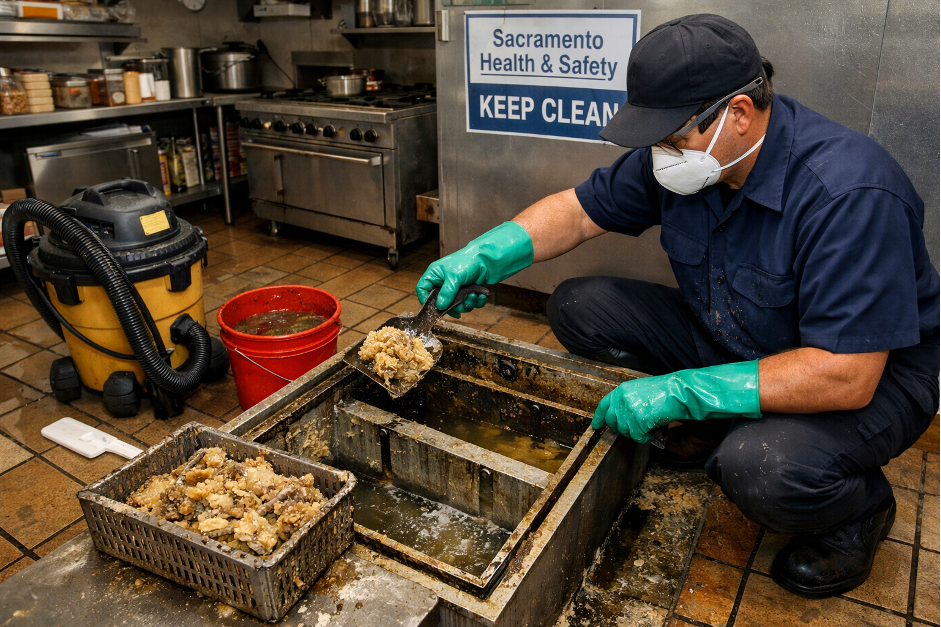
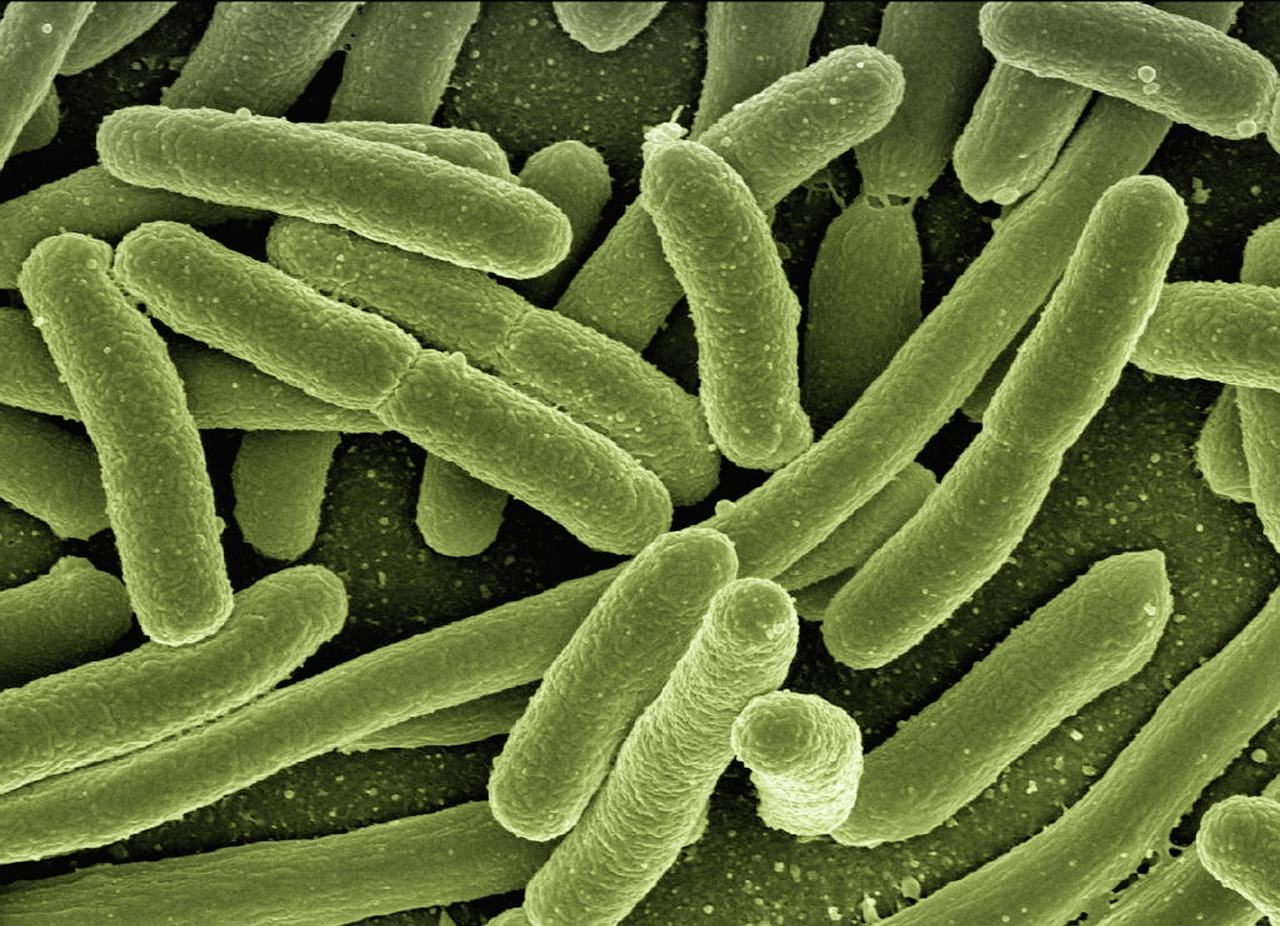
Manual cleaning addresses volume, not composition. Every gallon of hot greasy water that enters the trap after a cleaning still cools, still solidifies, and immediately begins rebuilding the same layer that was just scooped out. The bacteria naturally present in a grease trap exist in far too small a population to keep pace with the organic load coming from an actively operating kitchen.
Without active biological support, a freshly cleaned trap behaves like an empty container with no ongoing defense against the next several weeks of FOG input. This is the part every manual cleaning guide skips entirely: a clogged grease trap is a rate problem, not a volume problem, and scooping the trap out resets the volume without touching the rate at which new grease enters and hardens.
Read our In-Depth Guide to Fats, Oils & Grease (FOG) Control to prevent and remove grease and solid waste at your facility
The Secret to Staying Unclogged: Biological Treatment Between Cleanings

Biological grease trap treatments introduce concentrated bacteria and enzyme cultures that digest FOG continuously, not just on the day of a scheduled cleaning. These formulations break fats, oils, and grease down into carbon dioxide and water rather than simply loosening or dissolving them the way a degreaser or hot water flush does.
Regular biological dosing (as opposed to chemical treatment) keeps the bacterial population inside the trap high enough to process incoming FOG at close to the same rate it enters, which slows the buildup that leads to clogs and backups in the first place. Facilities running an active biological treatment program alongside their manual cleaning schedule consistently extend the interval between full cleanings and reduce the volume that needs to be scooped out each time one is performed.
The combination is what actually works: physical cleaning on a schedule, plus continuous biological treatment running in between those cleanings. That pairing is the real difference between a trap that clogs every month and one that does not.
Effective Products for Unclogging and Maintaining Grease Traps
We have a couple of very effective products that help you deal with solidified or stubborn fat and grease waste at your facility.
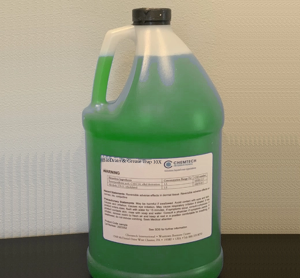
A highly concentrated liquid biological drain and grease treatment built on a synergized blend of selected Bacillus organisms and complex enzymes. It is Chemtech’s fastest-acting liquid digestant, formulated for accelerated degradation of grease, fats, proteins, starch, sugars, and cellulose in drain lines and grease traps.
Diluted 9:1 with water, it delivers 200 billion bacteria per gallon on a ready-to-use basis, giving kitchens a continuous biological population large enough to keep pace with active FOG input.
The full product catalog and technical sheets are available for download directly on the product page.

Microbe-Lift DGTT (Drain and Grease Trap Treatment) is a liquid culture blend formulated specifically for effluent line treatment and commercial drain line and grease trap applications. It breaks down FOG to reduce blockages and improve flow, controls the odor caused by decomposing organic matter, and minimizes the anaerobic conditions that allow grease buildup to accelerate between cleanings.
Ready to Stop Cleaning the Same Grease Trap Every Month?
A clogged grease trap is not a cleaning problem. It is a rate problem, with FOG entering the system faster than it is being broken down between cleanings. Manual cleaning will always be part of a grease trap maintenance program, but it only handles half of what actually keeps a trap from clogging.
Chemtech’s biological formulations are built to run continuously between cleanings, addressing the buildup at the source instead of resetting it on a schedule.
Explore our super-effective grease trap treatment solutions or request a custom quote by getting in touch with our team at Chemtech.
About Author

Neel Daphtary
Neel Daphtary is the President of Chemtech International. He oversees sales, distribution and business development. He excels at helping pharmaceutical and manufacturing firms find the right processes and environmental solutions. Neel is an active member of Global Philadelphia, an organization committed to community development in PA.
Have Any Questions Or Comments?
Call Us For Help!
888-709-8070