
Smoke odor isn’t just unpleasant, it sticks around. It clings to walls, fabrics, vents, and lingers in the air, often long after the smoke is gone.
And it’s not just about smell; exposure to lingering smoke can also affect indoor air quality and the health of inhabitants, too.
The worst part about smoke odor is that getting rid of it isn’t easy. Be it cigarette smoke, fire damage, or industrial fumes, they all leave behind complex odor molecules that resist typical cleaning methods.
You may try to open a window or spray some air freshener, but that might help only for a few hours, and the smell always finds a way back.
So what’s the solution?
In this guide, we break down where smoke odor comes from, why it’s so tough to eliminate, and what actually works for long-term smoke odor control, including professional-grade solutions that don’t just cover it up.
What Causes Persistent Smoke Odor?
Smoke particles are tiny. Really tiny. They’re small enough to wedge themselves deep into porous surfaces like drywall, carpet, upholstery, and even insulation.
And once they’re in, they’re hard to get out.
Some of the most common sources of persistent odor include:
- Tobacco smoke: Think of years of indoor smoking in apartments or vehicles
- Fire/smoke damage: Even a small kitchen fire can leave behind a smoky trace that lingers for weeks
- Industrial processes: Welding, manufacturing, or machinery that burns fuel
The problem is, most of the smell isn’t sitting on the surface. It’s buried deep in materials. Scrubbing the floor or spraying the air only addresses a fraction of the problem.
So why doesn’t regular cleaning work?
Because smoke isn’t just a smell, it’s chemistry. It leaves behind sticky tars and VOCs that bond to surfaces.
The reality is you need more than elbow grease to break that bond. That’s where true smoke odor control comes in.

Why Is Reducing Smoke Odor So Hard?
The reason why smoke odor control is difficult is, it contains volatile organic compounds (VOCs), tar and resins, all of which are designed to stick.
That’s literally what they do. They cling to everything they touch.
And here’s the other problem: the air moves them around.
If you’ve ever cleaned one room, only to find the smell settled somewhere else a day later, you know what I’m talking about.
Your HVAC system, fans, and even drafts can carry odor particles through an entire building.
And DIY sprays? They’re not built for this.
Most just add a temporary fragrance on top of the problem. Sure, it smells like lavender for a bit, until the smoke smell comes right back.
For lasting results, you need solutions or compounds that break the odor down at the molecular level.
Key Strategies for Effective Smoke Odor Control
Follow these four strategies to make sure you beat smoke odor in the most effective ways:
1. Removing the source
Before anything else, get rid of the worst offenders.
That couch that took in all the smoke? It’s gotta go. Burnt carpet padding, scorched insulation, or smoke-stained curtains? Remove them if you can.
Next, clean the surfaces you can’t toss. Steam-clean fabrics, scrub walls, and vacuum out air vents. This is your foundation. Without it, any treatment you use won’t have much to work with.
2. Adequate ventilation
Next, fresh air helps, just not as much as you might hope.
Open windows and bring in fans to move the smell out, especially early on. But once smoke odor is absorbed into materials, ventilation alone won’t cut it.
Still, it’s worth doing. Air movement helps reduce lingering particles in the space and gives your deeper treatments a fighting chance.
3. Ozone Machines
Some industrial professionals also use ozone machines to oxidize smoke particles. And yes, it works… in some situations.
But ozone can be harsh and isn’t safe to use in spaces where people are present. It can damage materials and isn’t always great for electronics and gadgets either.
Good tool, but not a perfect one.
4. Enzymatic and Biochemical Solutions
This is where things get interesting. Enzyme-based or plant-based formulas don’t just mask odors; they neutralize the particles causing them.
These products are non-toxic, safer to use in real-world spaces, and way, way more effective than a scented spray.
This is the shift from cover-up to cleanup!
Introducing Odorgone: A Smarter Approach to Smoke Odor Control by ChemTech
Most odor products work like a Band-Aid. They smell strong, cover the issue for a few hours, and then fade.
But Odorgone Industrial doesn’t work that way. Instead of adding a new scent, it breaks down the odor molecules themselves. Permanently.
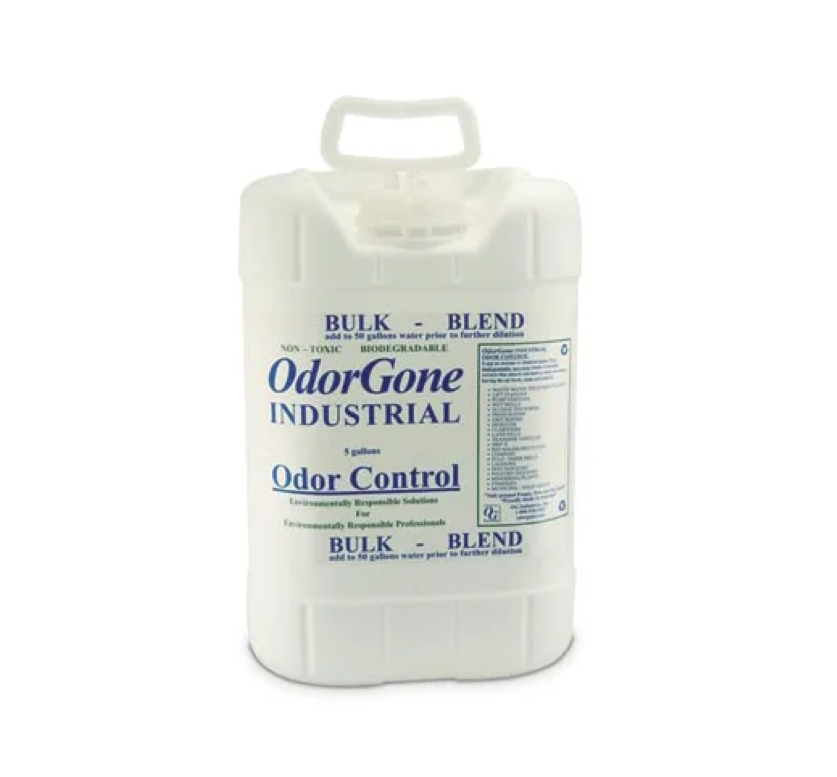 It’s made from plant-based ingredients. No harsh chemicals. No synthetic perfumes. And it’s completely biodegradable, so it’s safer to use around people, equipment, or delicate materials.
What makes it so useful for smoke odor control is its flexibility. You can mist it through HVAC systems, apply it directly to fabric, or spray it onto walls and ceilings. It works in housing units, hospitals, fire restoration sites, and even in factories.
The best part is, compared to ozone machines, bleach sprays, or perfume-loaded products, Odorgone’s approach is cleaner and easier. And because it doesn’t rely on masking, it’s reliable long-term.
👉 Explore how Odorgone Industrial works and see why more professionals are switching to it.
Real-World Use Cases for Smoke Odor Control
Here’s a few examples of how Odorgone is being used for practical, real-world applications:
After a Fire: Fire cleanup crews use Odorgone to treat surfaces and air systems. It’s safe to use while crews are still working and doesn’t require evacuation like ozone does.
Cigarette Smoke in Housing Units: Landlords use it between tenants to clear smoke smells from apartments, especially in older buildings where walls and vents hold on to odors. It cuts down turnover time and saves repainting costs.
Factories & Commercial Settings: In industrial areas and factories, smoke from equipment builds up in corners and ducts. Odorgone can be misted directly into those areas to break down odor particles.
In all cases, it’s fast, safe, and doesn’t require shutting down operations, making it ideal for high-traffic or critical-use spaces.
Best Practices for Long-Term Smoke Odor Prevention
OK, you’ve cleared up your space of all smoky odors. Now, how do you keep them from coming back?
- Follow a regular misting routine in high-risk areas to keep smoke from settling in again.
- Clean HVAC systems quarterly, or sooner if you’re in a smoke-heavy environment.
- Seal porous surfaces like wood or drywall with paint or primers designed to block odor absorption.
Remember, maintenance is key. Even if the smell is gone now, smoke odor has a way of creeping back if you’re not proactive.
Smoke odor doesn’t have to be permanent or toxic to fix. Chemtech International has solutions that give you a reliable way to take control of your spaces without resorting to overbearing solutions such as ozone machines, heavy chemicals, or endless sprays.
👉 Try Odorgone Industrial today and see the difference for yourself. No cover-up. Just clean, breathable air.
About Author

Neel Daphtary
Neel Daphtary is the President of Chemtech International. He oversees sales, distribution and business development. He excels at helping pharmaceutical and manufacturing firms find the right processes and environmental solutions. Neel is an active member of Global Philadelphia, an organization committed to community development in PA.





Have Any Questions Or Comments?
Call Us For Help!
888-709-8070