
Feed Meal Wastewater Effluent Trial

Introduction
In the feed meal industry, large scale production necessitates efficient waste management systems to dispose of, or make use of, by-products. Regulatory agencies place demands on these operations to reduce malodors and nutrient excesses associated with the effluent. To a greater degree, there is rising public pressure towards using natural alternatives in place of traditional chemical treatments.
Feed meal waste is typically managed by using mechanical systems that separate solids from liquids.
However, high levels of organic material remain in the liquid that if not broken down properly can result in obnoxious odors, along with a material not suitable for environmental release, or field irrigation.
CHEMTECH is widely known as an industry leader in the development of novel Bacillus blends for use in wastewater treatment applications. A recent third-party study was conducted with a feed meal processing facility that has shown very successful results. These impressive conclusions support a long history experienced by CHEMTECH customers in wastewater treatment applications.
To combat the challenges of malodors, high organic content, and reduction of chemical use, CHEMTECH scientists designed a microbial waste treatment blend that helps meet facility waste reduction goals, creates safer environments for operators, and keeps the waterways clean.
Trial Purpose
A third-party trial was conducted on raw industrial production facility effluent. The purpose was to confirm the effectiveness of CHEMTECH’s proprietary bacterial cultures at reducing BOD (Biochemical Oxygen Demand), along with malodors caused by ammonia and hydrogen sulfide.
Dosing
Test dosing compared the effects of 1ppm (part per million) and the recommended initial 5ppm dose of CHEMTECH WWT (Wastewater Treatment) 100B, a highly concentrated powder product.
Testing
The trial was performed on raw feed meal waste-water effluent samples after solids separation under conditions matching the facility’s effluent management strategy.
Samples were maintained in Erlenmeyer bioreactors with temperature and pressure control. No aeration or agitation was provided. Ammonia, BOD, and hydrogen sulfide levels were quantified at test initiation, 24-hours, and then every 48-hours over a period of 15 days using Hach spectrophotometric methodology. Each data point was derived from the average of 10 samples.
Results
Figures 1, 2, and 3 on the right report data from the trials using CHEMTECH’s microbial blend. Following the orange line in the graphs representing the 5ppm dose, ammonia, BOD, and hydrogen sulfide levels all began to decrease rapidly within the first 48-hours of this study. Final measurements of the 5ppm study demonstrated significant overall reductions in each major challenge facing industrial feed meal operations. While still exhibiting positive results, the 1ppm treatment showed lesser degrees of reduction in the three tested parameters.
The study results show that a single initial dose of CHEMTECH’s WWT 100B at 5ppm will greatly reduce ammonia levels and BOD by 99 percent, and hydrogen sulfide by 80 percent upon completion of the study.
Summary
The results of this trial prove the effectiveness of CHEMTECH’s microbial blend. The application of these naturally-occurring bacteria are an environmentally conscious means to meet the needs of the feed meal industry’s waste reduction goals. Improved performance of using a 5ppm dose over the 1ppm dose highlights the importance of proper dosing for maximum effectiveness. This treatment strategy, requiring no other additives, resulted in safer effluent for operators, and cleaner environmental release or useful by-product.
Technical Information
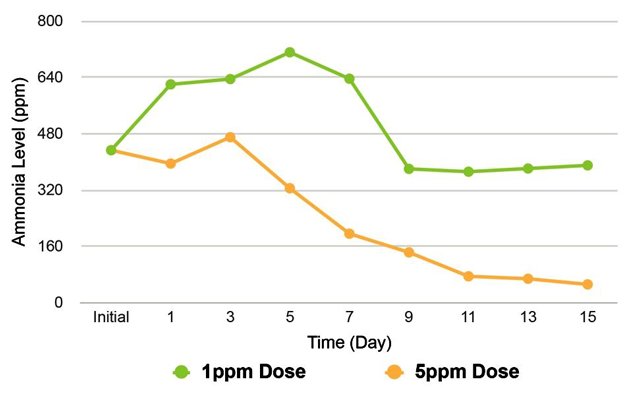
Figure 1: Feed Meal Wastewater Effluent
Ammonia Reduction

Figure 2: Feed Meal Wastewater Effluent
BOD Reduction
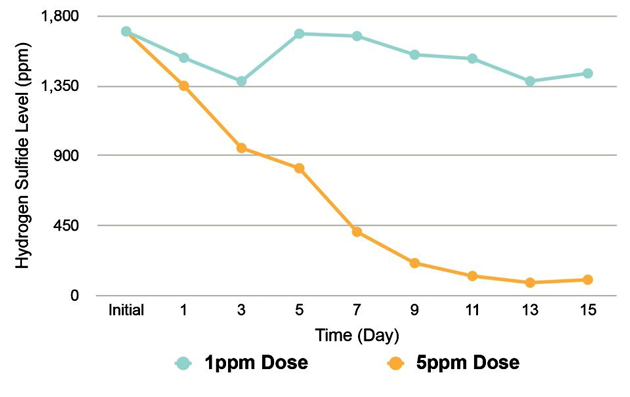
Figure 3: Feed Meal Wastewater Effluent
Hydrogen Sulfide Reduction
Get A Custom Quote
Fill out the form below.
Related Articles
Stay Informed with Chemtech International: Explore cutting-edge articles and breaking news in the world of chemical technology. Uncover innovations, industry insights, and advancements shaping the future of chemistry and beyond.

Have Any Questions Or Comments?
Call Us For Help!
888-709-8070