
Sludge builds quietly when tank volume shrinks a little and clarifier performance slips while disposal costs go up slightly.
But nobody calls it an emergency—and that is the problem.
Because none of it crosses a threshold that demands immediate attention, it keeps going until a pump fails, a drain field backs up, or an effluent reading triggers a compliance notice.
Municipal wastewater operators, food and dairy processing facilities, and septic system managers all know this pattern. Organic solids pile up faster than the system can break them down, and the gap widens month by month.
The causes can be different depending on the facility. In meat and poultry processing, high-protein waste hits the bottom fast and stays there. In dairy operations, fats and milk solids form surface crusts that trap gases and create odor problems. In municipal treatment plants, the sludge just keeps accumulating until it is eating into clarifier efficiency and budget.
However, what is consistent across all of it is that sludge is a biological problem. The system does not have enough microbial activity to keep up with what it is receiving. And the fix works the same way, biologically.
This article covers what sludge actually is, where it does the most damage, and what breaks it down without resorting to dredging.
What Is Sludge and Why Does It Keep Coming Back?

At its core, sludge is what happens when organic material enters a system faster than the biology inside can process it. It settles to the bottom, forms crusts at the surface, and occupies space that is supposed to be doing treatment work.
Two forms create the most operational headaches:
Bottom Solids
Heavy organic matter that sinks and compacts over time. As it builds up, the active volume inside the tank, the part actually doing biological work, shrinks. You end up running a system at, say, 70% of its real capacity while paying for 100% of its footprint.
In such situations, pumps get stressed, outlet components get blocked, and because it happens gradually, by the time it is obvious, it has already been costing you for a while.
Surface Crusts and Floating Organic Solids
Fats, oils, and fibrous materials do not settle cleanly. Instead they accumulate at the surface and harden into a crust layer that causes multiple problems at once.
It traps gases underneath, generates significant odor, and cuts off oxygen transfer in aerobic systems. In food and dairy processing, this kind of surface buildup is usually the first visible sign that things have gotten behind.
Why Does Sludge Build Up Faster in Some Systems?
Because biology cannot keep pace with the load. And there are three specific conditions that push that imbalance even further than others…
High-Strength Organic Waste
Food processing, meat production, and dairy operations send wastewater into treatment systems that are genuinely difficult to break down.
The fats, proteins, and fibrous compounds in those streams are slow-degrading even for healthy microbial populations, and EPA biosolids guidance is clear that high-strength waste streams consistently outpace what standard biological treatment can handle.
The solids accumulate faster than they are processed. Simple as that!
Refractory Compounds
Some organic materials just do not respond well to normal treatment conditions. Lignocellulosic fibers, complex lipids, and certain proteins resist standard breakdown and sit in the system long-term, compounding the sludge problem over time.
You would not necessarily know they are there until something downstream starts failing, because they accumulate invisibly.
System Overload and Shock Events
Seasonal production spikes, chemical discharges, sudden temperature changes, any of these can crash the microbial populations doing the breakdown work.
And those bacteria do not bounce back overnight. Recovery takes weeks or months when it is left to happen on its own. During that entire window, organic solids keep coming in and nothing is breaking them down at the rate they used to.
Where Does Sludge Cause the Most Damage?
There are different systems and different consequences where sludge can cost the most damage, but the common thread is that treatment performance goes down and operational costs go up.
Septic Tanks
When sludge takes up too much of the tank volume, undigested solids get pushed into the drain field before they have been treated. Drain field failure is expensive, orders of magnitude more expensive than the biological maintenance that would have prevented it.
For residential and commercial property owners, this is one of the clearest cases where a small ongoing investment prevents a very large unplanned cost.
Municipal and Industrial Wastewater Treatment Plants
Wastewater treatment plants are often running above their designed sludge load for years before they address it directly, and the financial drain is significant, both in disposal costs and in the energy required to compensate for reduced biological performance.
Food, Meat, and Dairy Processing Facilities
The waste streams here are harder to treat than standard municipal wastewater, and the regulatory requirements are just as strict.
High-fat and high-protein influent produces sludge volumes that overwhelm standard systems, and when a shock event crashes the microbial population, recovery is slower because the conditions that caused the crash in the first place—rich, complex organics—are still flowing in constantly.
How to Break Down Sludge (What Actually Works)
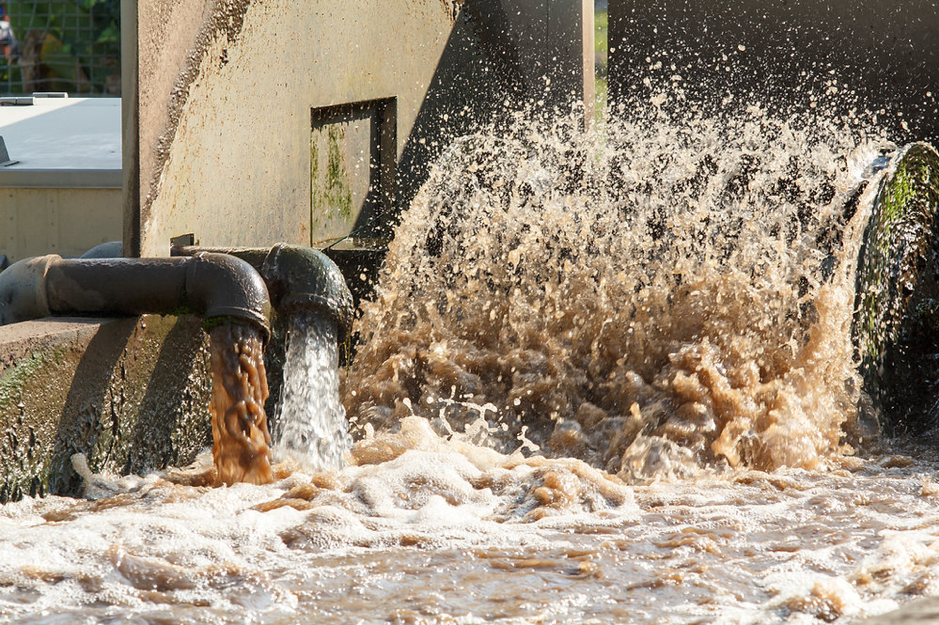
Accelerating the biological oxidation of organic solids already in the system, that is where real, sustained sludge reduction comes from.
Bioaugmentation with Specialized Microbial Cultures
By introducing concentrated microbial populations designed to target slow-to-degrade organic compounds, you can change the math inside the system.
With this method, bottom solids and surface crusts that have been accumulating for months start getting processed.
The good part is that the approach works across aerobic and anaerobic digesters, lagoons, lift stations, septic tanks, and pretty much every other system where biological microbe breakdown is the need of the hour.
Microbe-Lift SA performance data shows sludge reduction of 20% to 80% over historical system performance. That is a wide range because it depends on starting conditions, waste stream characteristics, and how consistently the treatment is applied but even the low end of that range represents substantial operational improvement.
Humate and Humic Substance Enhancement
Humates speed up microbial response to the organic compounds that bacteria normally take the longest to process. They work by enhancing biological activity in both existing and introduced microbial populations which means faster oxidation of the compounds that standard treatment leaves sitting at the bottom of the tank.
Consistent Biological Maintenance
One-time treatment produces one-time results. Since sludge accumulation is an ongoing process, sludge reduction has to be ongoing too. Low-dose continuous application keeps microbial populations strong enough to process incoming organic load before it settles, which is the actual goal, preventing accumulation rather than periodically removing it.
Chemtech Products That Break Down Sludge
We can’t tell you about the most effective, eco-friendly products that help break down sludge without selling them to you, can we?
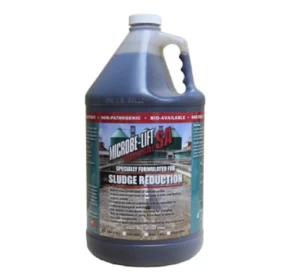
|
A blend of humates, humic substances, and beneficial bacteria that promotes enhanced microbial oxidation of difficult and slow-to-degrade organic waste. Works in lift stations, treatment plants, ponds, and lagoons. Improves both aerobic and anaerobic digester efficiency. Effective across a pH range of 4.0 to 10.0. No synthetic chemical constituents, non-toxic and non-pathogenic. |
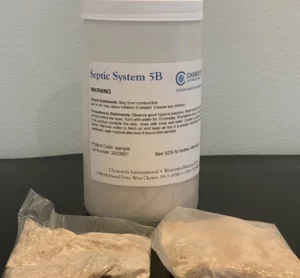
Septic Tank 5B
Formulated specifically for septic tank sludge reduction — residential and commercial. Restores biological activity to keep tank capacity where it needs to be and protect drain field performance before costly damage occurs. |
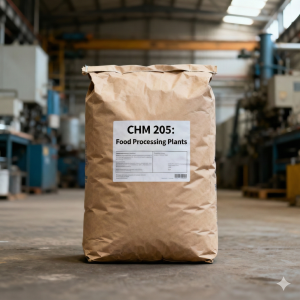
| CHM-205
|
CHM-201C
|

Stop Managing Sludge—Start Eliminating It
If sludge keeps coming back, it means the biological capacity inside the system has not caught up with the organic load coming in. Managing that gap with dredging or chemical treatment keeps the system running, it does not close the gap.
The right microbial formulation, matched to the waste stream and system type, restores that biological capacity. Septic tanks, municipal treatment plants, food and dairy processing facilities, the constraint is the same across all of them, and so is the lever to address it.
Explore Chemtech sludge reduction solutions or request a custom quote by getting in touch with our team!
About Author

Neel Daphtary
Neel Daphtary is the President of Chemtech International. He oversees sales, distribution and business development. He excels at helping pharmaceutical and manufacturing firms find the right processes and environmental solutions. Neel is an active member of Global Philadelphia, an organization committed to community development in PA.


Have Any Questions Or Comments?
Call Us For Help!
888-709-8070