
Did you know that for every 1 pound of Greek yogurt produced, approximately 3 pounds of acid whey are generated as a byproduct?
At a mid-size facility running thousands of pounds of product daily, that math adds up pretty fast. Yogurt and dairy processing facility managers, environmental compliance officers, and wastewater operations teams at food and beverage plants all run into similar hurdles.
The slurry in yogurt processing, a combined stream of acid whey and cleaning wash water, is too acidic and too nutrient-rich to discharge into waterways legally. It ferments quickly in storage.
The main problem? The process produces hydrogen sulfide (H2S) and other sulfur-based odors that intensify in warm conditions and create both compliance issues and community relations problems that do not stay contained to the facility perimeter.
But there’s good news – biological treatment of yogurt processing slurry handles both problems at once. It controls H2S in dairy processing at the point where it forms and breaks down the organic waste load in the slurry before it reaches discharge or further treatment.
What Is Acid Whey and Why Does Slurry in Yogurt Processing Generate So Much of It?
Roughly 50% of the world’s acid whey production is discharged untreated – this tells you how widespread and unresolved this challenge remains across the industry.
Acid whey is the thin, watery liquid left behind after Greek yogurt is strained or centrifuged to achieve its characteristic thickness. It contains lactose, lactic acid, proteins, and minerals, which are nutrient-dense in composition, but at the same time, they have a significant environmental liability in volume.
The pH of yogurt processing slurry is typically below 5. That is too acidic for direct biological treatment without adjustment and far too acidic for legal discharge into receiving waterways.
At the same time, yogurt facilities also generate cleaning wash water from CIP (Clean-In-Place) systems. The caustic and acid rinses used in those cycles further destabilize the pH of the combined slurry, which results in a waste stream that carries high BOD, high COD, elevated TSS, and a composition that standard wastewater bacteria cannot efficiently break down without help.
How H2S in Yogurt Processing Create Odor Problems
Acid whey ferments rapidly under anaerobic conditions, as storage tanks, lagoons, and collection systems at processing facilities provide exactly those conditions, particularly when waste sits between batch cycles or during warmer months.
During fermentation, bacteria break down the sulfur-containing amino acids in whey protein, producing hydrogen sulfide and mercaptans. Both compounds are responsible for the strong offensive odor, and if you have warm storage, that makes it even more odor-prone.
However, other than odor, H2S in dairy processing creates three compounding problems that need to be addressed:
1. Worker Safety and Air Quality
H2S is toxic at concentrations as low as 50 ppm, which is the OSHA ceiling limit for general industry. Workers in proximity to storage and treatment areas face real exposure risk if concentrations are not actively managed.
2. Regulatory Compliance
Odor complaints from surrounding properties can trigger regulatory scrutiny and enforcement actions. Facilities that rely on periodic cleaning or chemical masking to manage odor tend to find that neither approach holds when production volume increases or temperatures rise.
3. Downstream Treatment Interference
High H2S concentrations suppress the biological activity on which effective BOD and COD reduction depend. Letting H2S build up in the waste stream makes the treatment challenge downstream significantly harder and more expensive.
What Makes H2S in Yogurt Processing Slurry So Difficult to Treat and Dispose Off?
There are many reasons why yogurt processing slurry is not so simple to treat.
First, acid whey cannot be discharged into rivers. It promotes rapid bacterial growth in receiving waters, depleting dissolved oxygen and causing measurable harm to aquatic ecosystems.
Moreover, the low pH below 5 also inhibits the biological treatment processes that require a pH between 6 and 9 to function effectively.
Besides that, the high lactose content creates a fast-fermenting, high-BOD waste stream that overloads standard treatment systems before they can keep pace with production volume.
And, lastly, the disposal options that do exist each carry a high cost or operational complexity because hauling to municipal treatment plants becomes expensive at the volumes a mid-to-large yogurt facility generates.
On the other hand, land application is seasonal, permit-restricted, and logistically demanding.
Anaerobic digestion is effective but capital-intensive to implement at the facility scale.
Considering all of these aspects, most facilities end up managing the symptoms of odor and volume, rather than addressing the biological breakdown of the waste itself.
👉Also Read: FOG Control and Wastewater Treatment in Dairy Processing
How Does Biological Treatment Control H2S in Dairy Processing and Break Down Yogurt Slurry?
Biological treatment for acid whey slurry works by introducing specialized microbial cultures that degrade the specific compounds present – lactose, lactic acid, fatty acids, proteins, and sulfur compounds.
The mechanism targets H2S at the point of formation rather than at a downstream scrubber.
Here are three ways in which the process happens:
1. H2S and Odor Control in Dairy Slurry
Sulfur-oxidizing bacteria convert H2S and mercaptans to elemental sulfur, eliminating odor at the source rather than masking it. Microbe-Lift IND specifically degrades sulfur-containing organic chemicals, including mercaptans and hydrogen sulfide, making it directly suited to the yogurt processing waste stream.
2. Breaking Down the Organic Waste Load in Yogurt Slurry
Specialized microbial cultures degrade starches, fats, proteins, and lactose at accelerated rates, reducing BOD and COD in the slurry before it reaches discharge or further treatment.
Consistent dosing maintains active microbial populations between batch cycles, which prevents the fermentation and odor buildup that typically occurs during storage intervals.
3. pH and System Stability
Biological activity generates alkalinity over time, gradually stabilizing the acidic conditions in the waste stream that inhibit standard treatment. This is particularly relevant for yogurt slurry, where the combined effect of acid whey and CIP cleaning cycles produces wide pH swings that destabilize conventional treatment systems.
👉Also Read: Degradable and Non-Degradable Waste Sources and Disposal Methods
Chemtech Products for H2S Treatment of Slurry in Yogurt Processing
At Chemtech, we offer effective solutions that work at the biology level by degrading H2S at formation, breaking down the organic compounds in the slurry, and holding performance through the pH swings that yogurt facility cleaning cycles create.
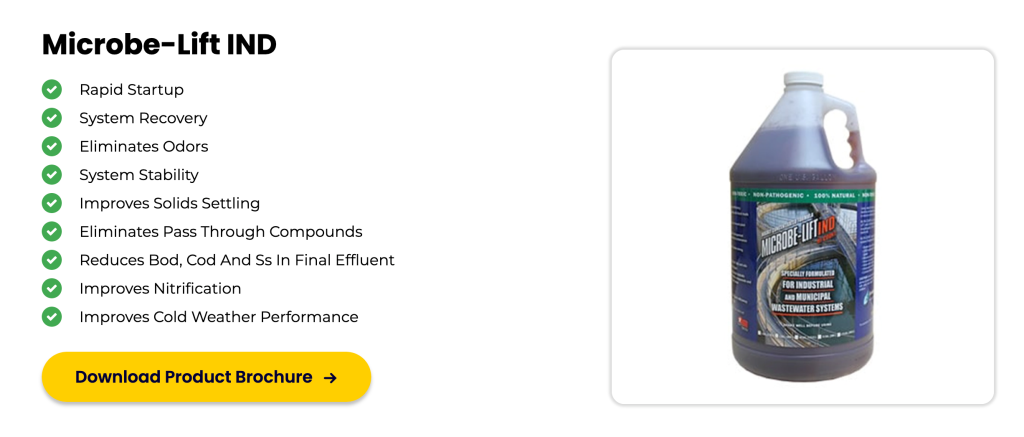 A liquid culture consortium that degrades H2S, mercaptans, fatty acids, starches, fats, and oils in dairy processing waste streams. Resists pH shock loads and chemical upsets common during yogurt facility cleaning cycles. Works in lagoons, activated sludge systems, storage tanks, and aerobic digesters.
 A concentrated bacterial powder formulated specifically for food processing waste streams. Targets fats, greases, and proteins at the concentrations typical of dairy processing wastewater. Reduces BOD, COD, and TSS in facility effluent.

Natural organic-based odor control technology that permanently binds H2S and sulfur compounds on contact. Effective across pH 5.0 to 9.5, which suits the variable pH conditions of yogurt processing slurry systems.
Ready to Treat H2S in Dairy Processing at the Source?
Acid whey slurry in dairy processing is a high-volume, high-strength waste stream with a compliance requirement attached to every batch produced.
Biological treatment that targets H2S at formation and breaks down the organic load in the slurry changes the economics of disposal, reducing BOD, controlling odor, and improving the treatability of what goes downstream.
Explore Chemtech’s dairy processing solutions or request a custom quote by getting in touch with our team today!
About Author

Neel Daphtary
Neel Daphtary is the President of Chemtech International. He oversees sales, distribution and business development. He excels at helping pharmaceutical and manufacturing firms find the right processes and environmental solutions. Neel is an active member of Global Philadelphia, an organization committed to community development in PA.


Have Any Questions Or Comments?
Call Us For Help!
888-709-8070