
Imagine this scenario: When you see the pipe of the wastewater collection system from outside, it looks intact, and the inspection schedule says it has years left. But inside, hydrogen sulfide has been turning into sulfuric acid on the concrete surface since the day the flow started moving through it, and the math on that corrosion is unforgiving.
Municipal wastewater operators, city engineers managing aging collection infrastructure, and system managers handling recurring odor complaints in residential and commercial areas all face the same compounding problem.
H2S in wastewater builds up inside force mains, lift stations, and gravity pipes. It corrodes concrete at rates of up to 12 mm per year. It immediately creates dangerous conditions for workers entering confined spaces. And it is doing all of this quietly, between inspection cycles, while the system keeps running.
The US spends $14 billion per year on direct infrastructure repair caused by H2S corrosion. Every $1 invested in proactive H2S control in wastewater systems saves approximately $8.50 in future repair and replacement costs.
This article covers where H2S in wastewater comes from, where it concentrates in collection systems, what controls it, and what sustained results look like in a real municipal application.
What Is Hydrogen Sulfide and How Does It Form in Sewer Systems?

Hydrogen sulfide (H2S) is produced when sulfate-reducing bacteria (SRB) break down sulfur compounds under anaerobic conditions inside wastewater systems.
The sulfur itself enters the collection system continuously from different sources:
- Municipal water supplies naturally contain sulfates from ground minerals.
- Human waste carries sulfur amino acids from protein digestion.
- Household and industrial products, including soaps, detergents, and process discharges, introduce sulfonates and sulfates into the network.
However, H2S generation is not uniform across the system. It concentrates in specific locations where anaerobic conditions allow SRB to thrive.
There are three “H2S hotspots” in wastewater collection systems—
Force Mains: These pressurized pipes run completely full of liquid. There is no air gap, oxygen depletes rapidly, and anaerobic conditions develop quickly. SRB populations thrive, and H2S concentrations build with residence time.
Lift Stations and Wet Wells: Turbulent water discharge at lift stations releases dissolved H2S gas directly into the surrounding airspace. This is where odor complaints originate and where corrosion of metal components accelerates fastest.
Flat Gravity Mains: Low-slope pipes allow sewage to move slowly, which results in solids settling. Thick anaerobic sludge layers develop along the pipe invert. SRB populations establish themselves in that biofilm and generate H2S continuously.
Remember, managing H2S in wastewater requires targeting where it actually forms, not just where it shows up as a problem.
The Effects of Hydrogen Sulfide (H2S) on Worker Safety and Sewer Infrastructure

The dangerous part about H2S is that it’s colorless, toxic, corrosive, and flammable. The rotten egg odor that makes it recognizable at low concentrations disappears at 100 to 150 ppm due to olfactory fatigue, meaning workers lose the ability to smell it precisely when concentrations become lethal.
And that’s why you cannot rely on only odor as a warning.
Here are the OSHA H2S exposure limits for industrial and municipal plant workers who deal with wastewater:
- 8-hour TWA (general industry): 20 ppm
- OSHA ceiling – 10-minute peak limit: 50 ppm
- NIOSH IDLH (Immediately Dangerous to Life/Health): 100 ppm
Continuous H2S monitoring and personal gas detectors are non-negotiable in any confined space entry involving wastewater collection infrastructure.
While human safety is paramount, few would know that H2S doesn’t even spare concrete sewer infrastructure for long. The corrosion mechanism runs in three steps as outlined below:
- H2S gas is released from wastewater to the sewer atmosphere.
- Thiobacillus bacteria on moist concrete surfaces above the waterline oxidize that H2S to sulfuric acid (H2SO4).
- The acid attacks calcium hydroxide and silicate hydrate in the concrete, dropping surface pH to 1.0 or lower and causing progressive material loss, cracking, and structural failure.
Typical corrosion rates run 0.72 to 4 mm per year. Under extreme H2S concentrations that rate climbs to 12 mm per year.
A 100 mm thick concrete pipe wall corroding at 5 mm per year can be completely destroyed in 10 years, cutting an expected 50-year service life down to under 20!
How to Control Hydrogen Sulfide in Wastewater Collection Systems
There are limited ways to mitigate H2S in wastewater, and the most effective programs combine approaches.

Physical H2S Control
Ventilation dilutes H2S concentrations and reduces the humidity that Thiobacillus bacteria need to oxidize H2S on concrete surfaces. Oxygen or air injection into force mains and wet wells maintains dissolved oxygen above 1 mg/L, which suppresses SRB activity before H2S forms.
Additionally, flow management in low-slope gravity mains maintains adequate velocity to prevent solids from settling and creating the anaerobic sludge layers where SRB establishes.
Chemical H2S Control
Oxidizing agents like hydrogen peroxide, chlorine, and potassium permanganate oxidize dissolved sulfide to elemental sulfur or sulfate. The reaction is rapid, which makes them useful for acute events; however, their short half-life means dosing requirements and costs are high for ongoing control.
Iron salts (FeCl2, FeCl3, FeSO4) precipitate sulfide as insoluble iron sulfide, removing it from solution. Cost-effective and widely applicable, though achieving very low H2S concentrations consistently is difficult.
Biological H2S Mitigation in Wastewater Systems
Sulfur-oxidizing bacteria (SOB) use oxygen or nitrate as an electron acceptor to convert H2S to elemental sulfur. What separates the biological method from the chemical one is that microbe-based control in wastewater systems operates at the point of H2S formation, instead of downstream. Chemicals can deal with H2S only after it’s already produced—they can’t preempt or prevent its formation.
Active microbial populations maintain continuous conversion between dosing events, preventing accumulation rather than reacting to spikes after they occur. And, the results are sustained rather than episodic.
Proven H2S Reduction Results in a Real Municipal Wastewater System
We’ve talked enough about H2S mitigation; now, let’s see some real numbers and how they look in a documented municipal application.
Location: Kibbutz Yagur, Israel — a community settlement of approximately 1,400 people
Treatment: Microbe-Lift biological technology applied at 1.5 gallons per week for four weeks
Results:
- Inlet H2S concentrations reached 4.0 mg/L
- Outlet H2S held consistently at 0.4 to 0.5 mg/L
- 85 to 90% H2S removal efficiency sustained post-treatment
- Outlet concentrations remained stable despite a threefold spike in inlet loading
The outcome that matters most here is not the percentage reduction, but its stability. Biological H2S control maintained performance under real-world variable loading conditions, not controlled test conditions.
Chemtech Products That Control H2S in Wastewater Collection Systems
Chemtech International has a wide range of eco-friendly and bio-based products that help you control byproducts such as H2S in your systems and facilities. That said, we’ll talk about two of the most effective and straightforward solutions to deal with both the formation of these chemicals and the odor caused by them.
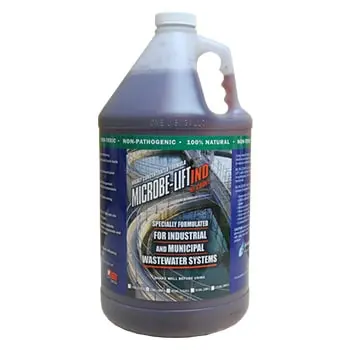
- Reduces H2S and ammonia odors in lift stations, force mains, and digesters.
- Contains Rhodopseudomonas palustris ELI-1980, a photosynthetic bacterium that uses the enzyme sulfide-quinone oxidoreductase (SQR) to convert H2S directly to elemental sulfur.
- Degrades FOG, phenols, surfactants, and chlorinated hydrocarbons.
- Works in lagoons, activated sludge bioreactors, bio-towers, and aerobic and anaerobic digesters.
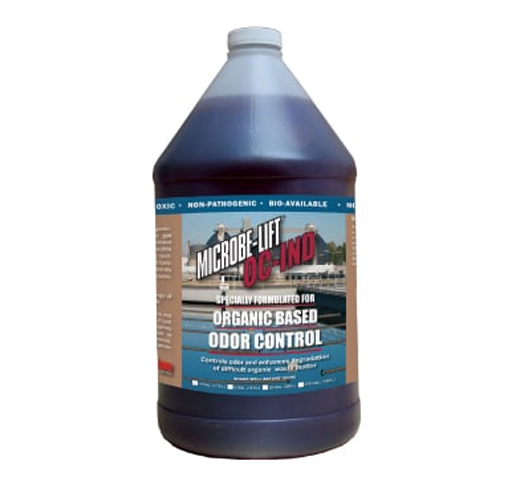
- Natural organic-based technology that permanently binds H2S and other odor-generating compounds on contact.
- Effective across pH 5.0 to 9.5 and a wide temperature range.
- Works in wastewater collection systems, storage lagoons, and transfer stations.
Ready to Get H2S in Wastewater Under Control?
H2S in wastewater is a biological problem at its root. As sulfate-reducing bacteria produce a gas that corrodes infrastructure, it endangers workers entering confined spaces and costs municipalities billions in repair budgets that could be going elsewhere.
Chemtech’s Microbe-Lift formulations are built specifically for this application, with documented performance in real municipal systems.
Explore Chemtech’s H2S control solutions or request a custom quote by getting in touch with our team today!
About Author

Neel Daphtary
Neel Daphtary is the President of Chemtech International. He oversees sales, distribution and business development. He excels at helping pharmaceutical and manufacturing firms find the right processes and environmental solutions. Neel is an active member of Global Philadelphia, an organization committed to community development in PA.


Have Any Questions Or Comments?
Call Us For Help!
888-709-8070