
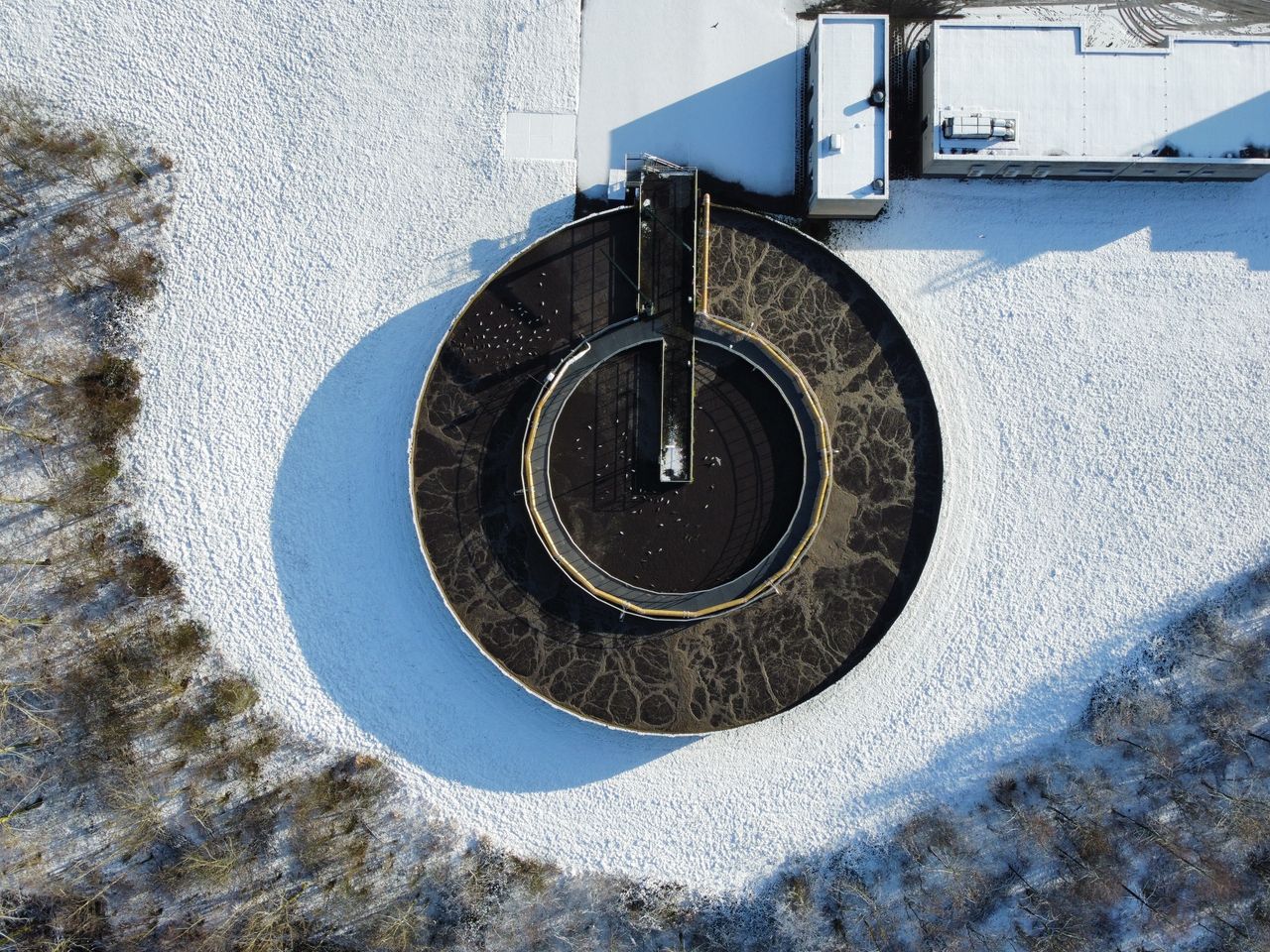
Clarifiers are a big part of the wastewater treatment system. These pieces of infrastructure need to operate effectively and efficiently, providing consistently reliable results following treatment. But in order for this to be the case, facility managers and teams must stay aware of settled solids.
There are different types of clarifiers used in wastewater treatment. Chiefly, these are tanks – which are closed structures into which influent flows – or basins; which are not fully enclosed and do not have a roof or covering over the top. In both cases, the levels and ratios of settled and suspended solids are important and must be monitored.
Read on to learn more about how this is, and what facility managers can do to regulate settled and suspended solid levels within clarifier wastewater.
What are Clarifiers Designed to Achieve?
What are clarifiers actually used for? Within a wastewater treatment system, clarifier basins and tanks are intended to achieve three important outcomes:
One – They use a process of sedimentation to separate the solid and liquid components of the mixture.
Sedimentation is a natural process that happens wherever liquid/solid mixtures flow. However, clarifiers aid this process, decelerating the movement of the wastewater to make sedimentation more efficient.
Two – They separate solids and liquids within the mixture by the process of flotation.
Flotation may be aided by the injection of dissolved air into the mixture, which adheres to some of the suspended solids to make them rise to the surface, where they can be skimmed and removed.
Three – They thicken solids so that they can be removed more easily, ahead of further treatment.
Thickening agents may be added to the wastewater mixture to accelerate the process so that filtration and removal become more efficient and effective.
Straightaway we can see that settled solids are an integral part of the clarifier process. The levels of settled solids within the wastewater flow still need to be monitored and regulated with great care and attention. If not, issues and inefficiencies begin to arise.
Solids in Clarifiers – Potential Problems and Solutions
Settling solids is a necessary function within the wastewater clarifier tank or basin. However, if this occurs at the wrong rate, or in the wrong volume, this can cause problems. Let’s take a look at what happens when the rate of settling solids is above or below the ideal parameters.
Settling Occurs too Quickly, or the Volume is Too High
The chief problem that arises when solids settle too quickly is that the infrastructure becomes overwhelmed. The wastewater system is unable to remove settled solids from the influent mixture, so the clarifier is not able to fulfill its proper function within the system. Over time, solids that have not been removed will build up, increasing the inefficiency and leading to longer-term issues within the system.
When solids settle too thickly, they form an irregular bed of sludge in the basin or tank. This makes measuring the sludge difficult and also inhibits the return of biosolids in activated sludge to the aeration basin. If settled solids remain within the clarifier for too long, filamentous growth, floating sludge pockets detached from the activated bed, and foaming can occur. All of this contributes to wholesale inefficiencies within the wastewater treatment system.
Settling Occurs too Slowly, or the Volume is Too Low
Remember that the primary aims of the clarifier are to achieve solid and liquid separation through sedimentation and flotation, and to thicken solids ahead of removal. In other words, a reliable rate of settling is required to make this happen.
If the rate of influent is too high, the volume of wastewater within the wastewater clarifier will similarly be too great to process. Facility managers need to keep a close eye on the influent rate from upstream, ensuring that this does not become too high and overwhelm the treatment processes within the clarifier. The effluent flow is also something to keep in mind – processing needs to take place quickly and efficiently so that effluent water can be directed out of the clarifier to support a continuous procedure of water treatment.
Even if the influent and effluent rates are normal, there may be other factors that lead to slow settling or low volume of settled solids. One of the key factors here relates to the biological characteristics of the influent wastewater itself. In some cases, the biological characteristics may prevent solids suspended within the wastewater from settling into sludge within the clarifier, decelerating the process the reducing efficiency.
The solid content of the underflow sludge, or blowdown, is also a factor. If the blowdown’s solids content does not conform to industry norms, this may have an impact on the operational cost of the facility.
Solutions to Settled Solid Issues
There are a number of different solutions to issues with settled solids in wastewater clarifiers.
- Ensure that the influent rate is not above the intended rating for the clarifier.
- Utilize coagulation and flocculation to reduce the level of suspended solids in the influent.
- Monitor the chemical conditions of the wastewater – including oxygen levels, temperature, and pH – to ensure these are optimized for sedimentation and flotation.
- Dewater the underflow sludge to optimize solid content.
- Measure the profile and content of the sludge bed within the wastewater clarifier.
- Make sure effluent can leave the clarifier efficiently.
- Use bio-augmentation methods to assist with the settling of solids within the clarifier.
- Alter the chemistry of the influent flow to support optimal settling within the clarifier.
Optimize Wastewater Clarifier Performance with Chemtech’s Product Range
Here at Chemtech, we provide a wealth of different products aimed at helping you support high levels of performance and reliability for your wastewater treatment processes – including your wastewater clarifier infrastructure. Control odors, ensure reliable results from wastewater treatment, and maintain optimal wastewater chemistry with a variety of different solutions in our range. Take a look at our product pages and catalogs to learn more about our wastewater clarifier solutions, or reach out to our team if you have any questions.
About Author

Neel Daphtary
Neel Daphtary is the President of Chemtech International. He oversees sales, distribution and business development. He excels at helping pharmaceutical and manufacturing firms find the right processes and environmental solutions. Neel is an active member of Global Philadelphia, an organization committed to community development in PA.

Have Any Questions Or Comments?
Call Us For Help!
888-709-8070