
Though stormwater management isn’t the most exciting part of site planning, it’s one of the most important and one of the most overlooked aspects.
Too many contractors push it down the priority list until a storm hits or a regulator shows up, and by then, it’s usually too late.
And when you and your team ignore proper stormwater controls, it can lead to serious issues like project delays, erosion damage, fines from local councils or the EPA, and even failed inspections that halt progress.
And these aren’t minor costs—they can easily stack up to thousands in lost time, rework, and equipment replacement.
So in this blog, we’ll highlight some potentially expensive stormwater management mistakes contractors and managers frequently make, and how you can avoid them.
Along the way, we’ll also show how Chemtech’s commercial-grade stormwater safety products—everything from drain seals to silt dikes—can help you stay compliant, efficient, and profitable on every site.
1. Ignoring Local or Federal Compliance Requirements
One of the biggest (and easiest to avoid) mistakes is skipping over local or federal stormwater regulations.
Many contractors assume what worked on the last job will pass again, but stormwater compliance varies by municipality, state, and even by project type.
And when you or your team fail to meet stormwater runoff or containment requirements, it can trigger
- Stop-work orders
- Environmental citations
- Fines from the EPA, local councils, or state regulators
And once you’re on their radar, repeat inspections become the norm.
But here’s what to do instead:
- Review environmental guidelines before breaking ground
- Consult with a certified erosion control specialist
- Use EPA-compliant solutions from trusted suppliers
ChemTech offers Drain Seals (Flyer PDF), berms, and other SPCC-compliant containment products built to help contractors meet federal and local standards without digging up half the site.
 2. Delaying Erosion and Sediment Control Planning
 2. Delaying Erosion and Sediment Control Planning
Another costly misstep is leaving erosion and sediment control for later, after excavation begins.
The result? Displaced soil, waterlogged trenches, and sediment runoff that clogs nearby storm drains or damages neighboring properties. These can lead to
- Washed-out slopes and roads
- EPA or council fines for sediment pollution
- Costly rework of foundations and site grading
How do you avoid these problems?
Plan erosion control in the pre-construction phase, not mid-project.
Use silt dikes, filter socks, or erosion control blankets at all vulnerable areas.
Train your crew on how to install and inspect erosion barriers.
Chemtech offers Universal Silt Dikes and Passive Skimmers (PDF) that are reusable, easy to deploy, and engineered to handle large runoff volumes without collapsing—perfect for high-activity sites.
3. Using the Wrong Stormwater Containment Materials
Remember, stormwater containment is only as good as the tools you use. And, relying on cheap, consumer-grade barriers or worn-out equipment is a common pitfall.
These materials often degrade quickly, especially under UV, traffic, or heavy rain conditions.
So when you don’t use the correct containment materials, it may result in
- Leaks during rainfall events
- Pooled water around sensitive areas
- Premature equipment failure and replacement costs
- Failed audits or inspections
To avoid these mishappenings,
- Invest in industrial-grade barriers, seals, spill decks, and filter pads.
- Avoid reusing visibly damaged gear.
- Match materials to site conditions (soil type, slope, rainfall volume).
Check out our range of drain guards and filter pads from Ultra. These are built for high-flow filtration and are excellent for curb cuts, pedestrian zones, and sites where stormwater needs to be both filtered and redirected efficiently.
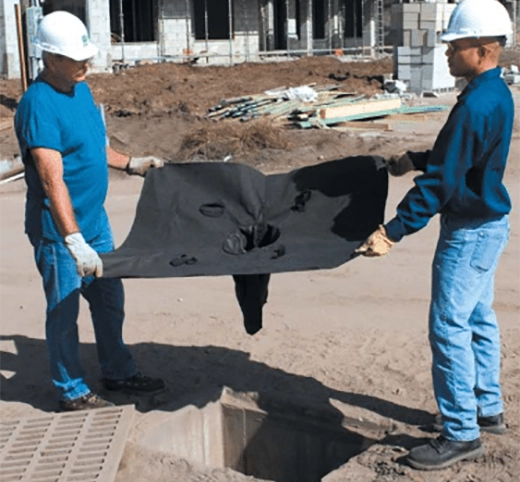
4. Improper Drain Inlet Protection Setup
Another common mistake many contractors and site engineers make is in underestimating how fast debris and runoff can overwhelm drain inlets.
Even if you place covers or filter socks, poorly secured or improperly sized protections can easily get knocked loose or clogged. This may lead to:
- Clogged storm drains and backup flooding
- Sediment buildup inside the drainage system
- Disruption of heavy equipment movement near the drains
The good news is, you can fix it with:
- Drain seals that match inlet sizes and resist displacement
- Filter socks or inlet guards secured with weights or brackets
- Routine checks after heavy rainfall or excavation work
Our range of drain seals from Ultra provide a tight, reusable barrier that resists runoff infiltration—even in high-traffic areas. They’re transparent, flexible, and easy to deploy in seconds.
5. Underestimating Weather Impact on Site Drainage
Planning your stormwater control based only on average rainfall? That’s a mistake too many contractors make.
Obviously, localized storms and shifting weather patterns can turn a calm site into a muddy mess in a matter of minutes. If you don’t plan for these eventualities, the risks add up quickly:
- Uncontained runoff reaching nearby streets or properties
- Undermined foundations due to erosion
- Loss of expensive materials stored in low-lying areas
The best way to overcome these challenges is by
- Monitoring local weather and adjusting drainage setups weekly, if not daily
- Positioning portable silt dikes or flood barriers near site perimeters
- Elevating sensitive materials and equipment in high-risk areas
ChemTech’s modular stormwater barriers, stackable silt solutions and spill containment products help you respond to unexpected storm events quickly, without shutting down your site.
You can also check out our dewatering bags and other sediment control products, which are designed for access and removal of large quantities of dirt, silt and sediment.
6. Lack of Ongoing Inspection and Maintenance
The work is not done once the site is built. Even the best stormwater setup needs regular checkups. But many teams adopt a “set it and forget it” approach, especially when they’re busy or understaffed.
The result? You don’t spot the leak or failure until it has already caused some damage. This leads to issues such as:
- Filter pads clogged with sediment
- Torn inlet guards letting debris through
- Cracked containment berms that go unnoticed
How do you solve or prepare for these?
- Assign inspection duties daily or post-storm
- Document findings to maintain compliance records
- Replace low-cost components (like inlet mats) regularly
7. Skipping Proper Training for On-Site Teams
Last but not least, assuming that your crew knows how to install and manage stormwater controls is risky.
Even seasoned workers can overlook simple things, like aligning a drain cover or sealing a berm end-cap. And when this happens, a lot of things can go wrong:
- Equipment gets damaged or installed incorrectly
- Costly rework due to failed inspections
- Injuries during heavy weather response
To overcome these challenges, train your team on
- Best Management Practices (BMPs)
- Where and when to use tools like silt socks, stormwater filter mats, and drain seals
- How to inspect, clean, and store stormwater products properly
Chemtech can help you standardize your stormwater protocols by recommending field-ready gear that’s intuitive and crew-proof, no matter the experience level.
Over to You
Stormwater mistakes don’t just cost you compliance; they also cost you time, manpower, reputation, and thousands of dollars in rework.
By planning early, using the right materials, and staying proactive with inspections and training, contractors can avoid nearly all of these setbacks.
Whether you’re managing a multi-acre development or a tight urban project, stormwater protection isn’t optional, it’s essential.
Chemtech offers a full suite of rugged, reliable, and regulation-ready stormwater safety products for contractors who don’t cut corners.
Explore our Stormwater Safety Products and keep your next project flowing clean, compliant, and uninterrupted!
About Author

Neel Daphtary
Neel Daphtary is the President of Chemtech International. He oversees sales, distribution and business development. He excels at helping pharmaceutical and manufacturing firms find the right processes and environmental solutions. Neel is an active member of Global Philadelphia, an organization committed to community development in PA.



Have Any Questions Or Comments?
Call Us For Help!
888-709-8070