
As pharmaceutical manufacturers grow their operations and serve an expanding consumer base, they need to find ways to meet higher demands without cutting corners. Without the right solutions in place, there is a very real risk of pathogen exposure to sensitive drug products.
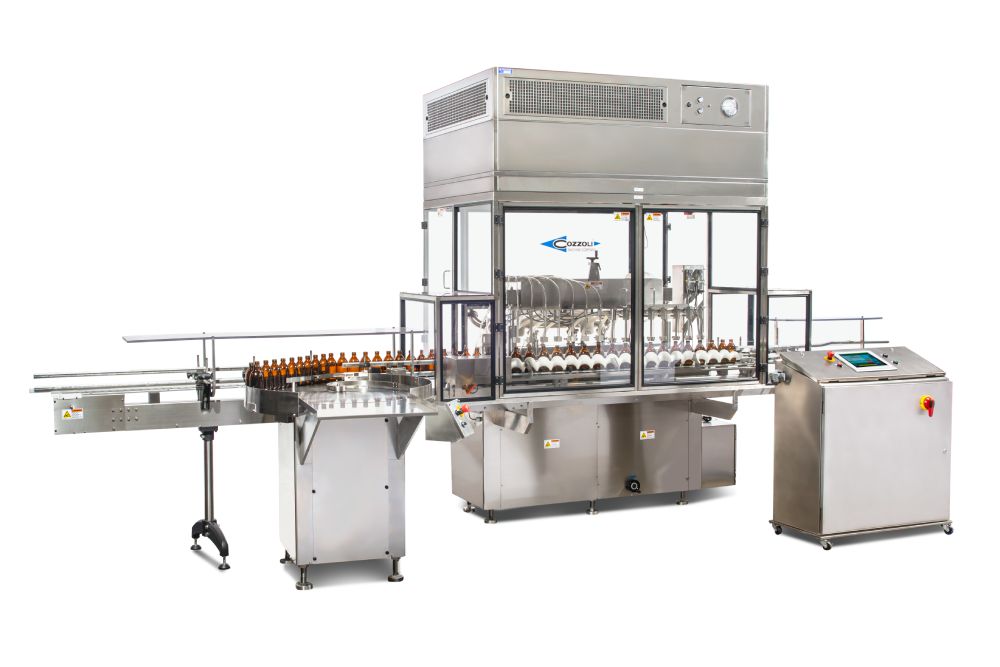
Modern machinery makes it possible to fully automate container loading with practically zero risk of contamination with aseptic filling machines.
Key Takeaways:
- Aseptic machines guarantee product safety at the vial filling step by ensuring pathogens are not present before, during, or after sealing the product.
- By sterilizing the medical product and the container separately before combining them in a closed system, aseptic machines provide a level of safety that is only possible because of the lack of direct human intervention.
- Using compatible vials and durable vial loading trays can minimize the wear to a filling machine and boost efficiency, maximizing the return on investment for manufacturers.
The Importance of Aseptic Filling
Safety is the top priority in the pharmaceutical industry, and that means manufacturers must have a zero-tolerance policy for pathogens and foreign substances contaminating their products. When products go out into the world, it must be 100% certain that they are completely sterile.
The filling process is the point of production at which the vaccine or other drug product becomes sealed within an appropriate vial. Assuming proper packaging and handling, there is no chance of contamination after filling until it comes time to administer the drug. That is why aseptic filling is so important: It is the last line of defense against pathogens and a crucial moment for ensuring sterility for sensitive products.
Statistics show there are over 1,000 drug recalls each year. The existence of recalls is positive, as they illustrate the industry’s commitment to only provide safe products to consumers, but it also highlights the need for more reliable practices in pharmaceutical production. This is where aseptic filling machines come in.
Asepsis is the complete absence of bacteria and other pathogens. While automatic filling machines are a common sight on pharmaceutical production lines, machines that are aseptic by design are not as widely adopted. Understanding how specialized filling machines work and how they contribute to true asepsis can help manufacturers increase their output of reliable products.
How Aseptic Filling Works
Whereas antiseptic processes aim to combat or reduce pathogens, aseptic processes completely eliminate pathogens or ensure that they were never present in the first place. The development of aseptic processes stems from the principle of sterile isolation. Aseptic filling is possible because the specialized filling machines remain in clean rooms where humans can only interact with them using self-contained equipment.

The process starts with the sterilization of the drug product and its container separately. Both the interior and exterior of the vial, as well as its cap or other sealing component, undergo thorough sterilization. A heating component then brings the container to a high temperature as an additional measure for killing any remaining pathogens.
The actual filling and sealing occur in a closed system, where automation ensures that each vial becomes filled precisely and without any wasted product. Personnel can manage the process from the outside, but a lack of direct human intervention guarantees that no harmful exposure is possible after sanitization of each component.
An aseptic filling machine with a closed system provides comprehensive end-to-end sterilization that is superior to traditional antiseptic procedures. The automated nature of a specialized filling machine also yields benefits of guaranteed protocol compliance, minimal product loss, and a swift yet scalable process that works well to meet any level of demand.
Using the Right Equipment for Aseptic Filling
An aseptic vial loading process is complex and delicate. The machines that perform this task have many moving parts and complicated functionality. While they are worth the investment for the sake of increasing productivity and safety, they can also be costly to repair or replace. That is why it is crucial to use the best equipment and accessories in tandem with the chosen filling machine.
This starts with implementing vial loading trays during the filling process. Filling vials without a loading tray is inefficient by comparison, forcing the machine to undergo certain rigors and corrosive exposure more often. Using vial loading trays helps the machine last longer by reducing the number of loading procedures that must take place on a daily, monthly, and yearly basis.
Furthermore, the automated process of filling vials is highly customizable via an intuitive user interface that controls most modern machines. With the right settings, the machine can fill a batch of vials loaded into a tray much faster than vials loaded individually.

Hurst Vial Trays distributed by Chemtech International are stellar examples of vial loading trays that help maximize productivity and promote longevity for filling machines. These trays are lightweight and resistant to corrosion, denting, and rust. Beyond being ideal for vial filling, the design of Hurst trays is great for handling, transporting, stacking, and storing.
The vials themselves are also a critical subject in a manufacturer’s production strategy. The right vials should be compatible with the aseptic filling machine and the loading trays, which not only reduces the machine’s burden but also keeps product wastage as low as possible.
Improving Aseptic Filling Processes for Pharma Manufacturers
Modern technology and advanced pharmaceutical techniques are making it possible to achieve true asepsis for the development and production of vaccines, medicines, and other drugs. Consumers understandably demand the highest quality product available, so it is necessary for manufacturers to employ advanced approaches to sterilization to maintain a competitive edge.
Aseptic filling is becoming a nonnegotiable process in the pharmaceutical packaging space, but it does not have to break the budget. Contact us at Chemtech International today to get a quote on the equipment to maximize your investment in cutting-edge vial filling machines.
About Author

Neel Daphtary
Neel Daphtary is the President of Chemtech International. He oversees sales, distribution and business development. He excels at helping pharmaceutical and manufacturing firms find the right processes and environmental solutions. Neel is an active member of Global Philadelphia, an organization committed to community development in PA.



Have Any Questions Or Comments?
Call Us For Help!
888-709-8070