
Walk into any pharmaceutical fill-finish facility and stainless steel is everywhere. On the walls, on the equipment, on the handling systems moving vials from one stage to the next. The material became the standard because it does not oxidize, tolerates repeated sterilization cycles, and satisfies FDA requirements for particulate control in sterile environments.
But stainless steel vial loading trays are not a single specification. There are two primary grades, three surface finish options, two welding methods, and gauge options ranging from 11 to 20, each combination suited to a different application, sterilization process, and compliance environment.
Specifying the wrong combination for your facility does not become obvious immediately, but it shows up six months later when cleaning protocols are not holding, surface integrity is degrading, or a QA audit flags a crevice corrosion issue in a seam.
Pharmaceutical and biotech procurement managers, fill-finish manufacturing teams, quality assurance managers specifying GMP-compliant equipment, and lab managers selecting autoclavable handling systems all face the same challenge where the product listings describe what the tray is made of, not which one is right for their process.
This guide covers every specification decision in plain language, so you can match the right stainless steel vial tray to your application from the start.
What Are Stainless Steel Vial Loading Trays Used for in Pharmaceutical Manufacturing?
Stainless steel vial loading trays provide handling, storage, and transport of glass vials through multiple stages of pharmaceutical processing such as vial filling, stoppering, capping, inspection, and lyophilization (freeze drying).
In vaccine production specifically, they handle large-scale vial volumes through automated filling lines and robotic loading systems where structural rigidity and dimensional precision are non-negotiable.
Applications of stainless steel and other metal trays across multiple facility types and industries:
- Pharmaceutical and biotech fill-finish manufacturing lines
- Vaccine vial filling machines and lyophilization (freeze drying) equipment
- Biotech research and clinical manufacturing facilities
- Aseptic fill-finish manufacturing environments requiring validated container handling
- Food and beverage production requiring corrosion-resistant, autoclavable tray systems
- Laboratory and science settings requiring reusable, sterilizable sample organization
Stainless steel syringe trays serve the same function for prefilled syringe handling in injectable drug manufacturing with the same material specifications, same finish and welding considerations; matched to syringe dimensions rather than vial diameters.
Type 304 vs 316L Stainless Steel Vial Trays: Which Grade Does Your Application Require?
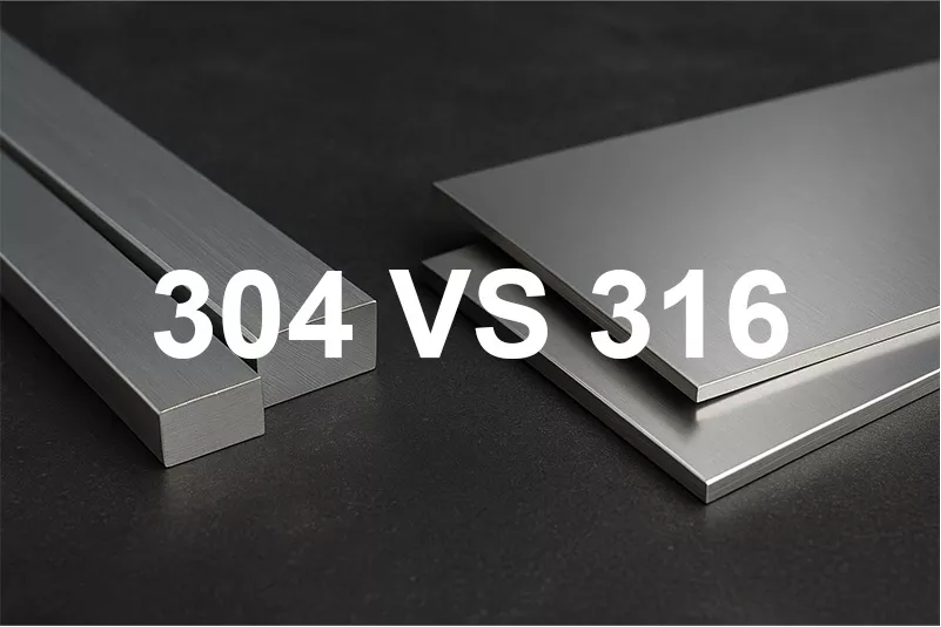
The grade of stainless steel determines corrosion resistance, temperature tolerance, and compatibility with your sterilization process. This is the first and most consequential specification decision.
Type 304 Stainless Steel: Type 304 is the industry standard, representing over 50% of all stainless steel production in the United States. It offers excellent corrosion resistance under normal operating temperatures and withstands standard autoclave sterilization cycles reliably. For most pharmaceutical vial handling applications that do not involve depyrogenation, chloride exposure, or distilled water contact, Type 304 is the correct specification and the more cost-effective one.
Type 316L Stainless Steel: Type 316L contains 2 to 3% molybdenum, which is what gives it enhanced durability in demanding environments. This grade is the right choice when your trays will undergo depyrogenation, a high-heat dry sterilization process that exceeds standard autoclave temperatures. It is also required when trays will regularly contact distilled water or chloride solutions. Type 304 corrodes under these conditions. Type 316L does not.
For injectable drug manufacturing environments where maximum corrosion resistance is part of the regulatory requirement, 316L is the standard specification regardless of whether depyrogenation is involved. The cost difference is real but small relative to the cost of a compliance failure.
Surface Finish Options for Stainless Steel Vial Loading Trays: What the Differences Actually Mean
Surface finish affects cleanability, sterilization effectiveness, and long-term surface maintenance, all of which have direct GMP compliance implications. There are three options that cover most pharmaceutical applications:
1. 2B Mill Finish
The 2B mill finish delivers a smooth, slightly reflective surface with a roughness average (RA) of approximately 8 microns. It is cost-effective, easy to maintain under standard cleaning protocols, and appropriate for most pharmaceutical handling applications that do not require enhanced surface cleanliness certification. If your application involves routine autoclave sterilization without cleanroom classification, 2B is the practical starting point.
2. Number 4 Brushed Finish
Also called a Florentine finish, the number 4 brushed finish features directional grain polishing with an RA of 25 to 30 microns. It is commonly specified for welded assemblies in pharmaceutical environments and is the standard for cleanroom-compatible stainless steel vial trays where visual surface inspection is part of the quality protocol. The directional grain makes surface anomalies easier to detect during inspection — which is pretty much why it became the pharmaceutical industry default for visible surfaces.
3. Electropolished Finish
Electropolishing is an upgrade process that removes surface oxides, enhances brightness, and reduces surface roughness by 30 to 40%. The result is a surface that improves sterilization effectiveness by eliminating micro-level features where microorganisms can establish.
For sterile fill-finish environments and aseptic manufacturing everywhere, contamination control is the primary performance requirement, electropolishing is the specification that removes the margin of error. Yes, it costs more. But for applications where surface integrity is part of the validated process, that cost is not optional.
Welding and Fabrication: What Cleanroom and Sterile Environments Require
The fabrication method determines whether corners and seams create harboring sites for microbial growth – a critical consideration for cleanroom-classified facilities.
TIG Welding (Tungsten Inert Gas / Fusion Welding)
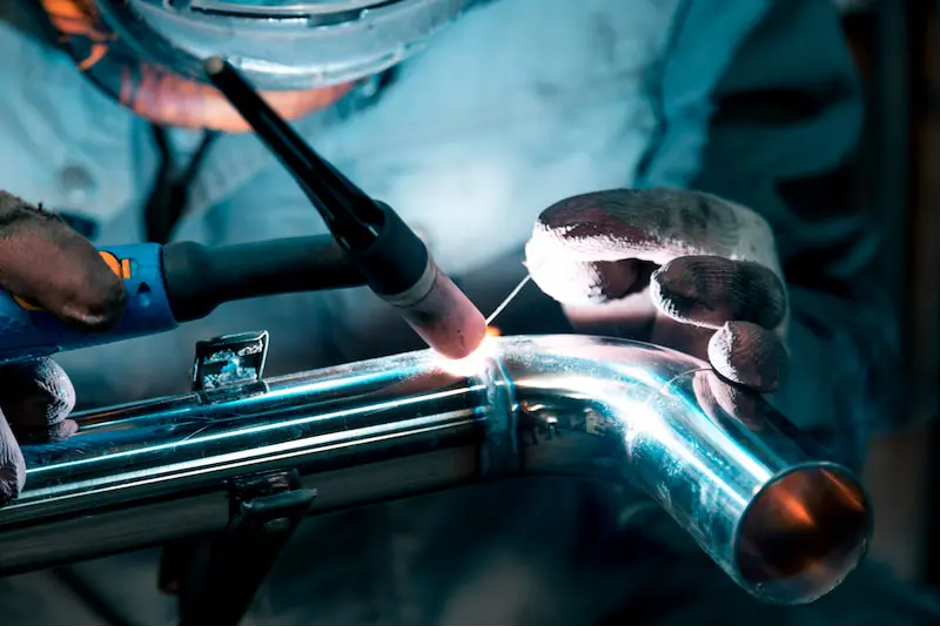
TIG welding creates watertight seams that eliminate corner gaps and crevices where microorganisms can establish themselves between cleaning cycles. For cleanroom and sterile pharmaceutical environments, this is the required fabrication method.
It demands skilled hand-finishing and costs more than tack welding, but for any facility where seam integrity is part of the GMP compliance profile, it is not negotiable.
Tack Welding with Folded Tab Construction
Tack welding with folded tab construction provides structural integrity at a lower cost and is appropriate for non-sterile applications where cleanroom-level seam integrity is not required.
Some tray designs at specific gauges can also be fabricated without welding while maintaining adequate rigidity, a useful option for lower-classification environments where cleaning protocol flexibility is valued over maximum seam integrity.
Stainless Steel vs Composite Vial Loading Trays: What Suits Your Application?
Both materials are used across pharmaceutical vial handling applications. The right choice in selecting a vial tray comes down to process temperature, sterilization method, and automation compatibility.
Stainless steel handles temperatures from -60°F to 250°F (-51°C to 121°C), making it essential for lyophilization, depyrogenation, and high-temperature autoclave cycles. Its structural rigidity also makes it the preferred material for automated machinery and robotic loading systems where dimensional stability under load determines whether the integration works reliably.
For applications involving chloride exposure or distilled water contact, stainless steel is the only correct answer.
Composite and polycarbonate trays are lighter, often lower in upfront cost, and offer a non-porous smooth surface that simplifies cleaning under standard protocols.
For applications that do not require stainless steel’s thermal and chemical tolerance, composite trays are a practical option. Why polycarbonate is ideal for vial holders in certain applications, and where the material limits require stainless is worth understanding before the specification is made.
Key Features to Look for in Stainless Steel Syringe and Vial Loading Trays
Beyond grade, finish, and fabrication, six features determine whether a tray performs reliably in production:
Precise hole sizing: Vials must fit snugly to prevent tipping, leaking, or breakage during transport through filling lines. Tolerance on hole diameter matters more than it appears until the first filling line jam.
No sharp edges or corners: Highly polished edges protect workers during handling and prevent vial surface damage during loading and unloading.
Quick-disassembly design: Multi-layer construction that disassembles without tools enables thorough cleaning between batches. Trays that require tools to clean tend not to get cleaned as thoroughly under production pressure.
Stackability: Unlimited vertical stacking with side handles saves cleanroom floor space and simplifies handling during storage and transport between process stages.
Gate design: A 3-sided tray with a removable slide gate allows faster loading and unloading on automated lines, reducing the manual intervention time that creates contamination risk in sterile environments.
Custom perforation: Slot and hole sizing matched to specific vial diameters, syringe dimensions, test tube sizes, or container formats. Off-the-shelf hole sizing is rarely a perfect match for production vial specifications.
Chemtech Stainless Steel Vial Loading Trays: Made in the USA (since 1992)
Chemtech International has a four-decade old history of supplying syringe holders and encapsulation trays to pharmaceutical and biotech manufacturers globally. As exclusive US distributor for vial loading trays and delivery systems, Chemtech offers the full specification range needed to match any pharmaceutical or biotech application.
Available in Type 304 and Type 316L stainless steel, with 2B mill, Number 4 brushed, and electropolished surface finishes. Custom perforation, slot sizing, and tray dimensions to match specific vial diameters and filling machine configurations. TIG welded for sterile and cleanroom environments; tack welded for non-sterile applications.
Gauge options from 11 to 20 cover the full range from heavyweight production trays to lightweight laboratory handling racks. Samples available on request before committing to a full order.
Made in the USA, so you don’t have to worry about tariff exposure, prototyping delays, or direct customer support from the team that built the tray.
Ready to Zero Down the Right Stainless Steel Tray for Your Facility?
Stainless steel vial loading trays are a long-term capital investment in the reliability and compliance of your filling line. The grade, finish, and fabrication method that are right for your process depend on your sterilization method, facility classification, automation requirements, and the specific containers you are handling.
Getting that specification right from the start avoids costly retooling, cleaning protocol failures, and QA findings that trace back to a tray choice that looked adequate on paper but was not matched to the actual process environment.
Chemtech’s team can help specify the right tray configuration for your vial size, process temperature, sterilization method, and automation requirements, with samples available before any commitment.
Contact us to get a customized quote or order a sample, or just call 888-709-8070!
About Author

Neel Daphtary
Neel Daphtary is the President of Chemtech International. He oversees sales, distribution and business development. He excels at helping pharmaceutical and manufacturing firms find the right processes and environmental solutions. Neel is an active member of Global Philadelphia, an organization committed to community development in PA.




Have Any Questions Or Comments?
Call Us For Help!
888-709-8070