
As pharmaceutical product manufacturers and retailers with decades of presence in the industry, we’ve witnessed the critical role that vial filling machines play in our industry. These sophisticated pieces of equipment are the backbone of various medicine packaging operations – be they in liquid or powder form – ensuring precise, sterile, and efficient filling. Let me walk you through the intricacies of these remarkable machines and the processes and principles on which they’re based.
Components of a Vial Filling Machine
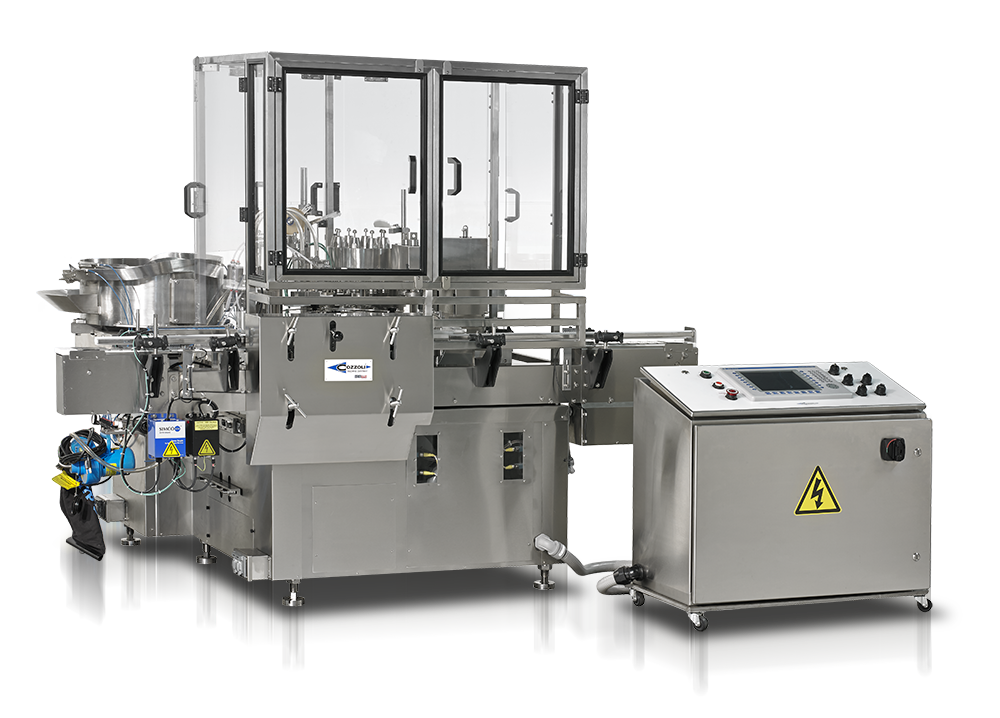
A vial filling and bunging machine is used to automate the filling and sealing of glass vials with injectable liquid or powdered solid products in the pharmaceutical and chemical industries.
There are many types of vial filling machines, depending on your use case, the state and viscosity of the product, and the material, size and shape of the container. At the heart of every vial filling machine are several essential components that work in perfect harmony:
The infeed system manages the careful transportation of clean, sterilized vials into the filling zone. Many prominent manufacturing facilities use a “star wheel” mechanism that precisely controls the movement of each vial, preventing breakage and maintaining optimal spacing.
The filling station houses the pumping mechanism. Modern peristaltic pumps are known for their exceptional accuracy and minimal product contact. For vaccines and biologics, time-pressure filling systems are employed; these offer even greater precision for sensitive materials.
The stoppering unit automatically places and seats rubber stoppers into filled vials. This process must occur in a Grade A environment to maintain sterility. Manufacturing facilities are equipped with laminar airflow systems to make sure no contamination occurs during this critical step. remarkable
The Vial Filling Process
1. Vial Cleaning and Loading
First of all, an automatic vial/bottle washing machine showers the bottles and vials. Inverted vials are fed through an SS wire mesh conveyor into buckets where they’re washed with a spray of clean water and hot air. They are then turned back into upward position and fed through a sterilizing tunnel where each vial undergoes a final cleaning with pharmaceutical-grade compressed air to remove any remaining particles or micro-adulterants.
The actual filling process then begins with an automated vial loading system. The pre-sterilized vials arrive in special trays and are automatically transferred onto the machine’s conveyor.
2. Pre-Filling Inspection
Modern aseptic vial filling machines incorporate high-resolution cameras that inspect each vial for defects. These machines routinely reject hundreds of vials a month for minor imperfections that might compromise product integrity.
Further, the filling mechanism on modern machines automatically adjusts for different sized bottles without any manual intervention. They have a “no bottle, no fill” system, where the machine automatically stops the process if there aren’t any bottles on the conveyor.
3. The Filling Operation
The actual filling process is a marvel of precision engineering. For example, the following things might take place when filling a 10ml vial of an antibiotic solution:
- The vial is positioned precisely under the filling needle
- The pump delivers exactly 10.2ml (accounting for the slight loss in the stopper)
- The entire operation takes less than 1 second
- Accuracy is maintained within ±0.5%
4. Post-Filling Process
The post-fill processing stage represents a critical sequence of operations that ensures product integrity and security. Once the filling operation is completed, each vial moves to the stopper insertion phase, which occurs within a stringently-maintained Grade A environment.
The mechanical insertion process is precisely calibrated to achieve optimal compression of the rubber stopper without damaging it or compromising the seal. Following stopper insertion, vials proceed to the crimping station, where aluminum seals are applied with carefully controlled pressure to secure the stopper in place while maintaining container closure integrity.
Then, an advanced weight verification system then conducts a deep check of all filled vials, comparing each against predetermined acceptance criteria. This system can detect deviations as small as 0.1% from the target weight, ensuring exceptional accuracy in our final product.
The process culminates in a comprehensive visual inspection, where sophisticated cameras examine each vial for particles, fill level accuracy, cosmetic defects, and proper seal integrity. Any vials failing to meet the stringent quality criteria are automatically rejected and segregated for investigation.
Quality Control: Ensuring Sterility of Vials
Quality control is paramount in pharmaceutical manufacturing. Vial filling machines incorporate multiple checkpoints:
- In-process weight checking: Every 50th or 100th vial is automatically weighed
- Fill volume verification through camera systems
- Stopper placement verification
- Seal integrity testing
Manufacturers routinely validate their filling processes – monthly or quarterly. More than 99% accuracy rates in our latest validation cycle.
The most critical aspect of vial filling is maintaining absolute sterility. Vial filling machines operate within isolators or RABS (Restricted Access Barrier Systems) that maintain:
- ISO 5 (Class 100) cleanliness
- Positive air pressure
- HEPA-filtered laminar airflow
- Continuous particle monitoring
Modern Innovations
The landscape of vial filling technology has undergone remarkable transformation in recent years. Recent advances include:
- Fully automated format changes, which reduce changeover times, lessen human intervention and minimize contamination risks
- Real-time process monitoring, which enables immediate detection and correction of process deviations
- Electronic batch recording, which ensures data integrity, traceability and tracking
- AI-powered defect detection, which identifies subtle defects such as hairline cracks in vials, stopper positioning anomalies and variations in crimping quality, and reduces false rejections
Practical Considerations and Challenges
Operating these sophisticated machines comes with its challenges. Common issues include:
- Stopper positioning errors during high-speed operations: These are addressed through stopper bowl design changes and vibration dampening systems.
- Pump calibration drift over extended runs: Peristaltic pumps typically begin showing minor volume variations after approximately eight hours of continuous operation. Automated recalibration protocols counter this by adjusting pump parameters based real-time weight check data and ensure consistent fill volumes.
- Temperature-related volume variations: Sophisticated temperature controls ensure product consistency, density and viscosity all the way from from buffer tanks to vials.
Rigorous preventive maintenance and operator training programs are necessary for consistent vial filling machine operations that live up to the high standards of the industry.
Applications in Pharma
Vial filling machines are complex yet fascinating pieces of equipment that demand respect, understanding, and expertise. As we continue to advance in pharmaceutical manufacturing, these machines evolve with us, incorporating new technologies while maintaining their core purpose: ensuring safe, accurate, and sterile filling of vital medications.
Finally, an oft-overlooked part of the vial filling process are the unassuming vial trays. Selecting the right vial trays are key to maintaining your sterilization protocols and ensuring consistent, high-performing vial filling operations.
This way, pharma manufacturers and distributors can meet the growing demands of the industry. Check out our latest range of Hurst Custom Vacuum Formed and Injection Molded trays to see how they fit into your processes.
About Author

Neel Daphtary
Neel Daphtary is the President of Chemtech International. He oversees sales, distribution and business development. He excels at helping pharmaceutical and manufacturing firms find the right processes and environmental solutions. Neel is an active member of Global Philadelphia, an organization committed to community development in PA.




Have Any Questions Or Comments?
Call Us For Help!
888-709-8070