
If you’ve ever walked through a wastewater treatment plant, you know it’s not just about pipes, tanks, and pumps. Rather, it’s about information.
Every sample bottle pulled, every test run in the lab, every number logged tells a story about what’s happening in the system.
Ignore those signals, and you risk clogged equipment, failed compliance tests, or worse: polluted waterways and public health threats.
And that’s why wastewater analysis matters. When done well, you can clearly see the difference between reactive firefighting and proactive control.
In this guide, we’ll dig into wastewater sampling and analysis, look closely at wastewater TOC analysis, and show how results connect directly to treatment efficiency.
Understanding Wastewater Analysis & Its Importance
At its core, wastewater analysis is generally about collecting a sample, testing it, and interpreting the data.
But anyone who’s been in this field knows the reality is more complex.
- Here’s our Practical Guide to Wastewater Testing that businesses can use as a starter template for how to go about water collection and testing.
Consider this scenario: You run a grab sample at the wrong time – say, right after a storm. The result shows “clean” water because the rain diluted the organics. You celebrate, thinking your treatment plant is running beautifully.
Two days later, you get a compliance violation because the average loading was way higher than that one sample showed. That’s the danger of treating wastewater analysis as paperwork instead of a decision-making tool.
One of the most useful modern parameters in wastewater analysis is TOC (Total Organic Carbon). Unlike BOD or COD, which can take days to confirm, wastewater TOC analysis gives operators a fast, sensitive look at organic load.
Think of it as an early warning system, so when TOC creeps up, you know oxygen demand is coming, and you can tweak treatment before the biology gets stressed.
And here’s what you need to keep in mind: the analysis is only as good as the sample. Poor technique or inconsistent timing will skew everything downstream. That’s why understanding the parameters involved in water quality analysis, the methods of measuring them, and consistency in interpreting the results are non-negotiable.
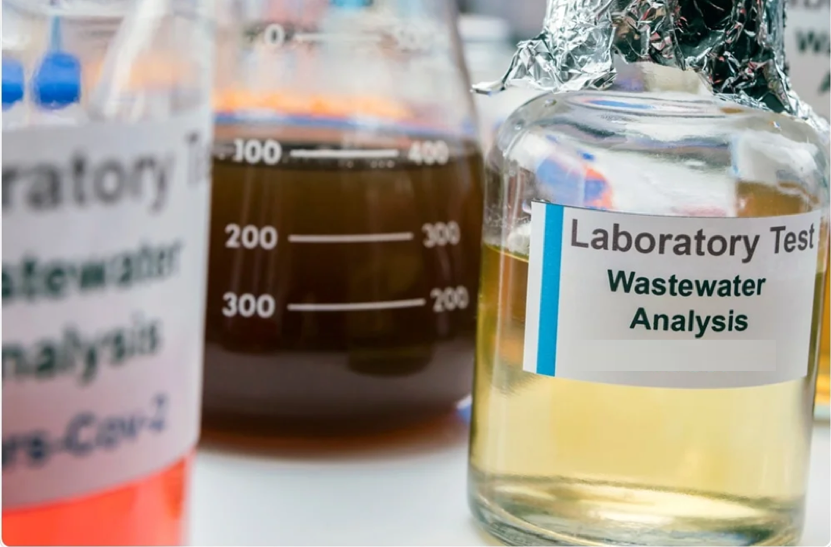
Now that you have some idea about wastewater analysis and why it’s important, let’s see what methods and practices are followed during sampling and analysis.
There are three main ways samples are collected, and each has its place:
- Grab samples: Quick and easy, but they only tell you what’s happening at that exact moment. They are useful for troubleshooting, but dangerous if you use them as your sole decision driver.
- Composite samples: These samples are collected over hours and combined. And they give a much better “average picture” and are often required for permits.
- Integrated samples: Taken from different depths or points to reflect how a tank or stream varies. If you’ve ever seen sludge settle differently in one corner than another, you know why this matters.
Once you have your sample, here are the key tests most operators rely on…
Total Organic Carbon (TOC)
Quick, precise, and critical for process control. It’s calculated as total carbon minus inorganic carbon. And to give you an idea, for fast adjustments, TOC always beats BOD.
Biochemical Oxygen Demand (BOD) & Chemical Oxygen Demand (COD)
These are traditional, tried and tested methods. Although they’re still essential for compliance reports, you can’t use them to make real-time operational changes as they take time.
Total Suspended Solids (TSS)
This shows how much particulate matter is hanging in the water. High TSS usually points to poor settling or overloaded clarifiers.
Fats, Oils, Grease (FOG)
FOG is the bane of municipal and industrial water systems. If you ignore it, you’re sure to run into clogged lines and reduced treatment efficiency.
- Here are some quick tips to solve the problems caused by Fats, Oils & Grease in sewer, septic and stormwater systems.
Remember, a good operator doesn’t just run these tests; they connect the dots and interpret various anomalies to find a wholesome and lasting solution to the problem.
Key Analytical Metrics of Wastewater Analysis and What They Tell You
Once you’ve run the recommended tests on samples from your water body, you need to know how to read the main metrics in the report.
TOC spikes: You know a surge of organics has hit the system. It’s an early signal to add aeration or adjust feed rates.
BOD/COD high, TOC steady: Likely inorganic chemicals are consuming oxygen, not organics. You need an advanced level of treatment in such cases.
TSS climbing: Poor clarifier performance or too much solids carryover. It’s time to check the sludge age or equipment wear.
Sludge Volume Index (SVI): If your sludge isn’t settling, the whole treatment process grinds to a halt. A high SVI often means bulking sludge, something our guide to measuring and controlling SVI can help you troubleshoot.
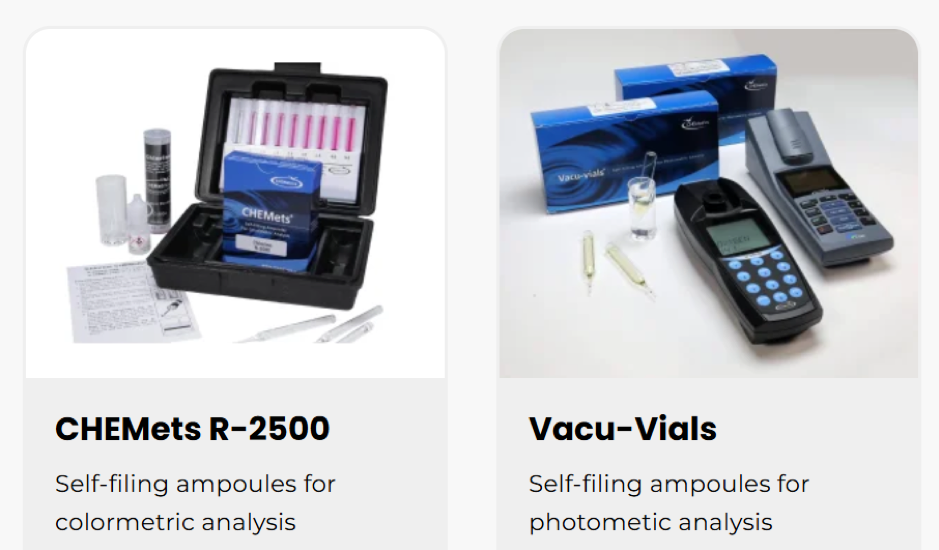
Chemtech has accurate and easy-to-use water testing kits for various home and business uses:
Interpreting Wastewater Sampling and Analysis Results in Practice
While evaluating the wastewater sampling and analysis, don’t just focus on looking at the numbers – the artistry lies in interpreting them because that’s where the real value is created.
Think of it like reading a blood test. One high number isn’t the full story. You need to look at patterns. Small shifts in TOC paired with TSS changes could mean upstream industrial discharges. High COD with normal TOC points to chemical contamination.
I remember a real-world case where a plant owned by one of our long-term clients noticed TOC levels creeping up in their daily composites, even though BOD looked fine. Based on the TOC data, we helped them increase aeration before the biology could crash. By the time the BOD results came back days later, the issue was already handled.
That’s the power of paying attention to these numbers – they invariably tell a story if you know how to read them right.
- Check out our articles on using water test kits to test well water, factors that influence the cost of well water testing, and how to interpret your well water analysis report correctly.
Timing matters too. As I said earlier, a grab sample taken during rain can show “clean” results that mask real loading. In such cases, composite sampling gives a much better operational average and saves you from chasing false positives.
From Water Contamination Data to Treatment Actions
Data should never just sit in a binder. Here’s how you can bring operational changes with the analysis.
Have High TOC? See if activated carbon acts as a buffer until biology stabilizes. Excessive TSS? Look at settling tanks, sludge wasting, or filter upgrades. Poor SVI? Adjust aeration or sludge recycle to get the floc back in shape.
Getting preliminary wastewater treatment done solves problems upstream and saves you a lot of trouble downstream. If you catch issues early, the fixes (such as grit removal and FOG separation) will be small and quick. But if you don’t, the costs can balloon alarmingly.
We offer a wide range of wastewater treatment products for municipal and industrial applications:
 Pond Clear Dissolves pond sludge, reduces turbidity, and stops algae growth in lakes and ponds |

Bacteria-based product to remove fish/animal waste and decaying plant material from water systems |
|
Releases bacteria in controlled doses into wastewater and effluent-handling facilities |
Specially formulated compound that promotes production of healthy shrimp and fish |

Emerging Trends in Wastewater Analysis and Their Impact
With the evolving times, wastewater analysis is becoming an important factor that influences public health at large. These days, wastewater-based epidemiology is being used to track flu, norovirus, and even drug usage patterns in cities.
Additionally, digital sampling networks are making this faster and more accurate, turning sewers into community health monitors.
All of these shifts point to a broader truth—wastewater isn’t just “waste,” it’s a mirror of public health and industrial resilience, necessary to sustain our environment and communities.
About Author

Neel Daphtary
Neel Daphtary is the President of Chemtech International. He oversees sales, distribution and business development. He excels at helping pharmaceutical and manufacturing firms find the right processes and environmental solutions. Neel is an active member of Global Philadelphia, an organization committed to community development in PA.

Have Any Questions Or Comments?
Call Us For Help!
888-709-8070