
Anyone operating a wastewater treatment plant needs to be able to monitor their processes. The sludge volume index is one key metric you can use to check that your facility is optimized.
Read on to learn more about how to measure and control SVI.
What is Sludge Volume Index?
Sludge volume index, or SVI, is designed to provide an easy reference for wastewater treatment plant operators who want to gauge the health of their process.
The index will tell you whether the mixed liquor suspended solids (MLSS) in the activation tank are settling at the right rate, or if they are hindering the function of your facility. You may need to make some changes to the composition of the sludge in your aeration tank based on your findings.
How to Calculate SVI
There is a tried and tested method of calculating the sludge volume index at your facility:
- Take a sample from the aeration tank. This sample should be classed as “mixed liquor,” which means it contains activated sludge from the aeration tank, mixed with raw wastewater and returned sludge. This is a technical way of describing the material within the aeration tank.
- Let the sample settle for 30 minutes before analysis begins.
- Analyze the sample and find out the concentration of suspended solids. This will be your mixed liquor suspended solids or MLSS value (represented in g/L).
- Divide the wet volume of the settled sludge (represented in mL/L) by the MLSS value from the last step.
- This calculation will give you your SVI value (represented in mL/g).
This is the simplest and most effective way of calculating the SVI.
How to Control Your SVI
The typical sludge volume index for a sludge wastewater system that is operating as it should will be between 50 and 150 mL/g. If your SVI is outside of this range, you may need to take steps to control the sludge levels in your system.
Looking at the characteristics of different samples will give you some clues as to what you can expect from your own wastewater system.
- If the SVI is 80 mL/g or less, the sludge will be very dense and will settle rapidly.
- If the SVI is between 100 and 200 mL/g, the sludge will settle a little more slowly, trapping more particulate matter during the settling process.
- If the SVI is above 250 ml/g, the sludge is very, very slow to settle, and does not compact well. The result is a light and fluffy texture to the sludge.
Before you set about controlling the SVI at your facility, use the above values to decide whether you need to raise or lower the index.
To increase the index
You will need to increase the waste sludge rate. This will result in a slower rate of settling, which in turn will trap more of the solids suspended in the mixed liquor, leading to a clearer effluent.
To reduce the index
You will need to do the inverse of the above to reduce the waste rate. This results in a thicker sludge with heavier particles. As the density increases, so does the rate of settling, making the process more efficient.
These methods can be used to bring the SVI into the typical or preferred range, or to fine-tune the sludge in the aeration tank to ensure the best possible operation for your facility.
The Chemtech Solution
We have just the product that significantly reduces existing sludge as well as stop sludge production in wastewater treatment systems. Microbe-Lift SLUDGE AWAY is proven to reduce sludge by 30 to 60% in municipal and public water systems while reducing gaseous odors.
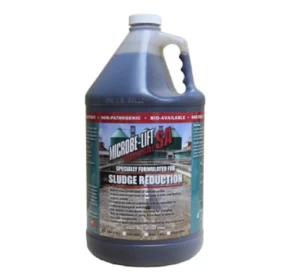
Microbe Lift Sludge Away
- Accelerates breakdown of bottom solids
- Accelerates breakdown of surface crusts and floating organic solids
- Contains all natural nutrients and accelerators to enhance biological activity
- Can reduce or eliminate the need for dredging
- Aids in breakdown of many refractory or slow to degrade compounds
- Contains most micronutrients required by microorganisms
About Author

Neel Daphtary
Neel Daphtary is the President of Chemtech International. He oversees sales, distribution and business development. He excels at helping pharmaceutical and manufacturing firms find the right processes and environmental solutions. Neel is an active member of Global Philadelphia, an organization committed to community development in PA.

Have Any Questions Or Comments?
Call Us For Help!
888-709-8070