
Many industries, professions, and essential services make use of compressed CO2 gas for a variety of use cases. Whether your occupation exposed you to the handling of CO2 gas cylinders in the past or if you are preparing to operate compressed gas valves for the first time, it is extremely important to understand all of the possible dangers and proper procedures of the job.
This starts with learning everything there is to know about CO2 regulator valves and how to use them.
Key Takeaways:
- Carbon dioxide is a harmless gas in low concentrations but can be potentially deadly at high concentrations after a gas leak.
- Using a compressed gas regulator valve with proper safety measures in mind will reduce the risk of harmful accidents.
- Compressed gas valves manufactured by Sherwood are durable, reliable, and suitable for tasks involving compressed CO2 gas.
Understanding Carbon Dioxide and the Role of CO2 Regulator Valves
Carbon dioxide is a gas that is easier to compress than air and harmless to humans in low concentrations, making it the go-to choice for industrial processes that require compressed gasses. However, CO2 can become very dangerous at high concentrations, especially because it is completely colorless and odorless. A person exposed to a high concentration of CO2 may experience carbon dioxide hazards including dizziness, loss of consciousness, or even asphyxiation.
For the sake of safety, you need gas to flow exactly where you want it, with no misdirection, leakage, or backflow. You also need a way to check that you released the precise amount you intended from the tank to avoid overflow and ensure precision in sensitive tasks involving compressed gas. For this and more, a CO2 regulator valve is an essential piece of equipment.
A regulator valve is part of the system to externally control the internal pressure of a compressed gas tank. Different uses for compressed CO2 gas call for different output pressures, so a regulator valve is important for accurately monitoring and adjusting the pressure according to the situation. This differs from how you might use a CO2 check valve to control the direction of gas flow, but the two types of valves can function in tandem.
Using a regulator valve to control the pressure of a CO2 tank is necessary in a number of industrial and professional use cases, including but not limited to:
- Carbonating beverages
- Pressurizing aerosol cans
- Fabricating metal
- Fire extinguishing
- Insufflating and other medical uses
Regardless of the application, personnel must fully understand the safety implications and best practices involved in using, operating, and replacing a CO2 regulator valve before handling equipment that could potentially release harmful gasses into an enclosed space.
How To Use a CO2 Regulator Valve
Before proceeding to use a CO2 compressed gas cylinder for any application, there are important safety precautions to keep in mind:
- Never attempt to supply compressed CO2 gas directly from the gas cylinder; always connect the CO2 gas cylinder to a functional regulator valve
- Keep the gas cylinder secured in an upright position
- Keep gas cylinders away from sources of heat
- Always ventilate a space after CO2 leakage
- Check that the gas cylinder has a Department of Transportation tag not more than 5 years past certification
When you are ready to use the CO2 compressed gas cylinder, connect the regulator valve to the tank’s valve inlet port. Ensure that the regulator’s shut-off valve is in a closed state.
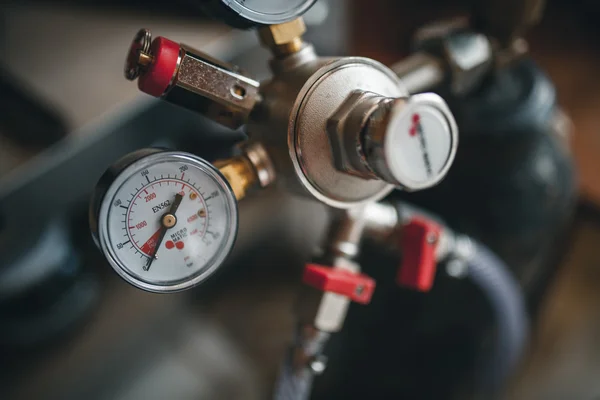
Completely open the gas cylinder valve. You can then slowly turn the regulator adjustment knob until the pressure gauge displays the desired pressure for your use case. After connecting to the receptacle that you wish to pressurize, you can open the regulator shut-off valve.

A single-stage CO2 regulator valve is easier to use and suitable for short-term applications. A dual-stage regulator can provide more precise regulations for gas pressure, making it ideal for longer jobs.
With any type of regulator valve, always close the main valve and purge any remaining pressure from the regulator when the job is done. Always make sure that cylinder valves are completely closed when not in use, even if you believe the cylinder to be empty.
When CO2 gas cylinders are not in use, the recommended method for storage is to stand them up on a compatible base. Many bases come equipped with a strap or belt to ensure the cylinders do not fall over, as falling impacts can result in damage that releases harmful gas into the air.
Purchasing or Replacing a CO2 Regulator Valve
It is a good, responsible practice to replace compressed gas valves every five years or when any type of damage to the valve becomes apparent. Durable construction can give a valve great resistance to wear, but the effects of use are still inevitable. When dealing with potentially dangerous gasses, never compromise on safety, functionality, or design quality.
Sherwood cylinder valves distributed by Chemtech International provide the quality, safety, and innovation you need when purchasing or replacing a CO2 regulator valve. Sherwood valves are subject to advanced inspection and process controls and meet all certification requirements for full FDA approval.
Sherwood manufactures a wide variety of specialty gas valves for differing use cases. The 6074 and 6674 series valves are uniquely suited to regulating CO2 pressure for compressed gas cylinders.

All valve components are the result of Sherwood’s own design, development, and manufacturing processes. When the time comes to replace the regulator valves for your CO2 gas cylinders, this commitment to quality can make all the difference when it comes to the performance and longevity of the valves you choose.
Prioritizing Quality for Your CO2 Regulator Valves
Regulator valves are essential for ensuring safety and precision when using compressed gasses, including carbon dioxide. Handling CO2 is a sensitive process, so it’s important to understand how to safely and efficiently use the valve component of a CO2 tank.
Get the quality and durability you can rely on with CO2 regulator valves manufactured by Sherwood and distributed by Chemtech International. Contact us at Chemtech today for a free quote.
About Author

Neel Daphtary
Neel Daphtary is the President of Chemtech International. He oversees sales, distribution and business development. He excels at helping pharmaceutical and manufacturing firms find the right processes and environmental solutions. Neel is an active member of Global Philadelphia, an organization committed to community development in PA.



Have Any Questions Or Comments?
Call Us For Help!
888-709-8070