
You might not think about medical gas valves often, but in hospitals and healthcare facilities, they have a huge role to play as they deliver life-saving gases like oxygen, nitrous oxide, and medical air.
These valves don’t just control the flow of gases; they practically guarantee the safety of patients while helping you comply with the strictest medical regulations.
When you choose the right medical oxygen valves with the right features, you can prevent leaks, and avoid risky accidents.
But what exactly are medical gas valves, what are their main types and what functions do they have?
Let’s get answers to all of these questions one by one.
Why Are Medical Gas Valves Critical?
In simple words, medical gas valves are precision-engineered components that control the flow and pressure of medical gases used in hospitals, clinics, and emergency response settings.
Without these valves, gases can get contaminated, systems may fail, and patient care may be compromised.
To talk about how they work, we can say that every medical gas system relies on a network of pipes, cylinders, and distribution systems to ensure a continuous and safe gas supply.
One scenario where medical gas valves play an important role, to give you an example, is life-saving procedures and machines.
Think of anesthesia delivery systems. It relies on a steady and uninterrupted flow of medical gases. If by chance if you choose a faulty valve, it can result in too much or too little gas, leading to serious complications during surgery.
Curious about how medical gas valves compare to industrial ones? Read our article on Medical and Industrial Gas Valves: Understanding the Differences.
Now, there are seven main types of medical values and each of them has a unique functionality. Let’s take a quick and close look at these different medical gas valves, how they function, and why they are so important in healthcare facilities.
1. Cylinder and Manifold Valves

In most hospitals, medical gases are stored in high-pressure cylinders.
In such cases, cylinder and manifold valves control the flow of these gases into the hospital’s pipeline system to make sure of a smooth and uninterrupted supply.
Without a properly functioning cylinder or manifold valve, gas distribution can be inconsistent, leading to delays in patient care.
For example, if you have a hospital with multiple operating rooms, you will need to have manifold valves to switch between gas cylinders automatically so that there are no interruptions during surgeries.
Commonly used in: Centralized gas distribution systems in hospitals and clinics
Check out our GSV & GSHV Series Cylinder and Manifold Valves
2. Residual Pressure Valves (RPV)

Residual pressure valves are important for maintaining the integrity of medical gases.
These medical valves keep a small amount of pressure inside the cylinder even when it’s nearly empty to prevent contaminants like moisture and bacteria from entering.
By installing residual pressure valves, you can maintain the purity of the gas supply and provide high-quality care (read, prevent infections and comply with the highest medical standards) to patients.
Commonly used in: Hospitals and emergency medical service centers
Check out our GSRPV Series Residual Pressure Cylinder Valves
3. High-Pressure Line Valves
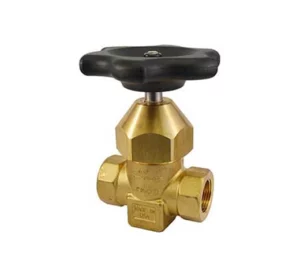
Moving next, if you have a huge hospital, you would know how vast networks of pipes carry oxygen, nitrous oxide, and medical air to different departments.
High-pressure line valves, in such cases, regulate the flow of these gases and ensure proper pressure levels throughout the system.
This further helps in preventing dangerous pressure drops or spikes that could damage sensitive medical equipment.
Commonly used in: Large healthcare facilities with extensive gas pipeline networks
Check out our range of High Pressure Line Valves
4. SCBA Valves & Regulators
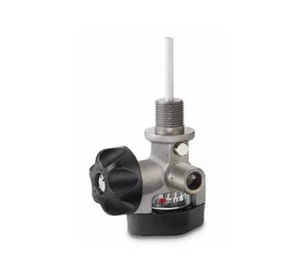
SCBA (Self-Contained Breathing Apparatus) valves regulate the flow of breathable air for first responders and healthcare workers in hazardous environments. Think of firefighters, paramedics, and hospital emergency teams. They rely on SCBA valves and regulators to ensure a safe air supply.
These valves can be life savers in disaster situations like fires or chemical spills by providing a controlled air supply to the workforce so that they don’t have to inhale toxic fumes.
Commonly used in: Emergency response teams, firefighters, and high-risk healthcare settings
Check out our YV Series SCBA Valves & Regulators
5. Vertical Outlet Valves
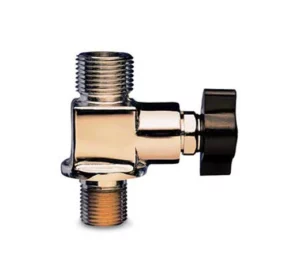
Let’s be honest – not all hospitals have the luxury of large mechanical rooms. In such cases, vertical outlet valves help optimize space by allowing gas to flow in a vertical direction rather than taking up unnecessary room.
The best part about vertical outlet valves is that they allow hospitals to maximize space while maintaining efficient gas distribution.
So if you have a small outpatient surgery center, you can use vertical outlet valves to fit the gas distribution system into a compact area without compromising performance.
Commonly used in: Hospitals with space constraints and non-traditional building layouts
Check out our YVBA Series Vertical Outlet Oxygen Valves
6. Alternative Energy Valves
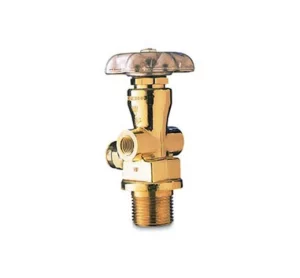
As hospitals look for ways to reduce their environmental impact and contribute to a sustainable future, alternative energy valves are becoming more common these days.
They support medical gas systems that operate on renewable energy sources. So if you have a solar-powered oxygen generation system, you may opt for alternative energy valves.
Commonly used in: Eco-friendly hospitals and sustainable healthcare facilities
Check out our DF Series Alternative Energy Valves
7. Pressure Relief Devices
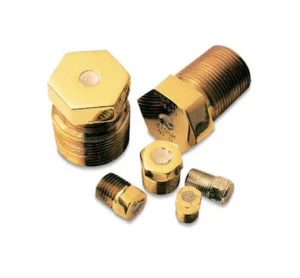
Sometimes, gas systems can become over-pressurized, leading to leaks, system failures, or even explosions.
To avoid such situations, you can use pressure relief devices as they act as a safety net by releasing excess pressure before it becomes dangerous. It helps you protect both medical staff and patients from gas-related hazards.
Commonly used in: Every medical gas system that prioritizes safety and compliance
Check out our range of Pressure Relief Devices and Fuse Plugs
Choose the Right Type of Medical Valve for Your Health Center Today
While running a hospital, medical gas valves might seem trivial, but they are in no way insignificant. In fact, these valves are crucial to hospital safety and efficiency.
Whether it’s ensuring a steady oxygen supply in an ICU or preventing contamination in gas cylinders, when you choose the right medical valve, it can make all the difference.
Further, regular inspections, proper maintenance of medical gas valves help you prevent failures and ensure the best possible care for patients.
Looking for the best medical gas valves or pressure relief devices? Get in touch with Chemtech for high-quality products that match all current regulations and standards. We are authorized stockists for the entire range of Sherwood Cylinder valves.
About Author

Neel Daphtary
Neel Daphtary is the President of Chemtech International. He oversees sales, distribution and business development. He excels at helping pharmaceutical and manufacturing firms find the right processes and environmental solutions. Neel is an active member of Global Philadelphia, an organization committed to community development in PA.





Have Any Questions Or Comments?
Call Us For Help!
888-709-8070