
Most facilities running above their total suspended solids (TSS) permit limits are not failing because they lack treatment capacity. They are failing because the organic load driving TSS in the first place is not being addressed, and every physical and chemical intervention downstream is compensating for a biological problem that keeps regenerating.
Municipal wastewater treatment plant operators, industrial facility managers in food processing and manufacturing, and environmental compliance officers managing discharge permit violations all deal with the same compounding pattern in which TSS climbs, clarifier output gets flagged, and a reactive intervention gets applied. And as a result, TSS climbs again next cycle.
EPA secondary treatment standards require publicly owned treatment works to achieve a minimum of 85% TSS removal, with a maximum effluent concentration of 30 mg/L on a 30-day average.
Industrial facilities discharging to municipal systems operate under pretreatment standards tied to receiving system capacity. Missing those thresholds triggers surcharges, permit reviews, and enforcement actions, none of which are cheap.
This article covers what TSS is (a quick recap so we’re on the same page), what drives it, and how to remove suspended solids from wastewater in a way that produces sustained results rather than periodic relief.
What Are Total Suspended Solids in Wastewater?
Total suspended solids are solid particles suspended in wastewater that do not dissolve and are large enough to be captured by a filter, typically defined as particles larger than 2 microns.
TSS includes organic matter such as bacteria, algae, and food waste particles alongside inorganic material including silt, clay, and chemical precipitates.
It is measured in mg/L using the gravimetric filtration method – a sample passes through a pre-weighed glass fiber filter, the filter is dried, and the weight difference is the TSS concentration.
The operational consequences of high TSS compound quickly as it reduces water clarity and increases turbidity across the system. Moreover, it contains particles that harbor bacteria that resist standard treatment. Not only that, but filters and pipes clog faster. BOD and COD in effluent rise alongside TSS.
And every downstream treatment stage performs less efficiently when the suspended solid load coming into it is higher than it was designed to handle.
What Causes High TSS in Wastewater Systems?
TSS rises when the rate of organic and inorganic solids entering a system exceeds its capacity to settle, filter, or biologically degrade them. Here are the four drivers that consistently appear together in high-TSS facilities:
- High organic loading: This is the most common root cause of TSS increase. Food processing, dairy, meat production, and municipal operations generate large volumes of proteins, fats, and fibrous material that settle slowly and carry significant BOD load into treatment stages not equipped to handle the volume.
- Sludge accumulation: Sludge formation reduces active treatment volume of the water in your reservoir. Accumulated bottom solids displace usable clarifiers over time; the tank has not shrunk, but the portion of it doing productive biological work has. Effective residence time drops. More solids carry through to effluent.
- Weak or crashed biological populations: These directly raise TSS output. Healthy microbial populations flocculate and settle suspended organic matter as part of their normal metabolic activity. When those populations are crashed by shock loads, temperature swings, or chemical upsets, that flocculation stops, and TSS in effluent rises immediately.
- Inorganic solids and stormwater infiltration: Inorganic compounds and foreign bodies push TSS loads beyond designed capacity, particularly in combined sewer systems. Silt, clay, and sand do not respond to biological treatment and require physical separation at the front of the process.
How to Remove Suspended Solids from Wastewater
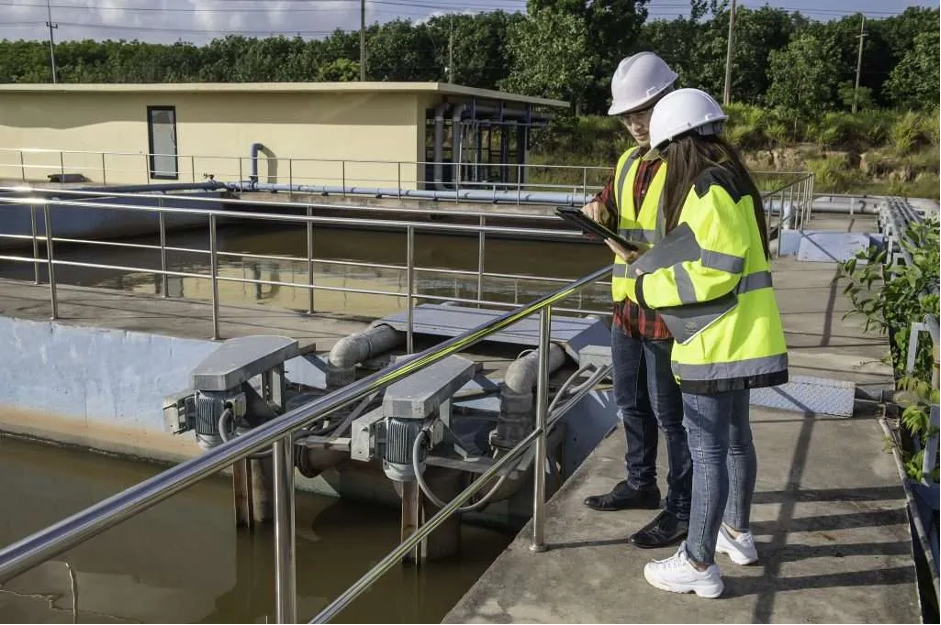
If your wastewater system has accumulated high-volume TSS, there are primarily three different approaches to get rid of them:
PHYSICAL
Screening and bar racks at the headworks remove coarse solids before they enter the treatment process. This is the first and most basic intervention, not a substitute for anything downstream, but a necessary step that protects equipment and reduces load on biological stages.
Sedimentation and clarification use gravity to settle heavier particles in primary clarifiers. Effective for settleable solids, but limited for finer colloidal and organic suspended material that does not settle without further intervention.
Dissolved air flotation introduces fine air bubbles that attach to suspended solid particles, floating them to the surface for removal. Particularly effective for fats, oils, and grease-laden TSS in food processing wastewater where density differences do not favor gravity settling.
Filtration through sand, multimedia, or membrane systems polishes effluent after secondary treatment, capturing fine particles that carried through earlier stages. High capital cost but capable of achieving very low TSS concentrations where permit limits are strict.
CHEMICAL
Coagulants such as aluminum sulfate and ferric chloride destabilize the negative surface charge on suspended particles, allowing them to aggregate into larger clusters that settle faster in clarifiers. Flocculants, typically polymer-based, bind those clusters into larger flocs with enough mass to settle efficiently.
Chemical coagulation and flocculation are effective and widely used. The limitations are real though: ongoing chemical cost, increased sludge volume requiring disposal, pH sensitivity requiring careful operational management, and no reduction in the organic load that keeps generating new suspended solids.
BIOLOGICAL
Aerobic and anaerobic biological treatment uses microbial populations to degrade the organic matter that makes up the majority of TSS in municipal and industrial wastewater. This is the method that addresses causation rather than symptoms.
Healthy biological populations produce extracellular polymers that flocculate suspended particles naturally, improving settling and reducing TSS in clarifier effluent without chemical addition. Bioaugmentation, introducing concentrated microbial cultures with specific degradative abilities, accelerates TSS reduction in systems where native populations are insufficient for the incoming organic load.
See how 7 companies managed their total suspended solids problems with biological treatment programs across different facility types and waste streams.
Why Biological Treatment Is the Most Sustainable Path to Suspended Solids Reduction
Physical and chemical methods remove TSS after it forms. They do not reduce the organic load entering the system, and they do not prevent the same volume of solids from forming in the next cycle.
Biological suspended solids reduction works at a different level. It degrades the organic compounds that become TSS before and during the treatment process, reducing both the volume of solids produced and the sludge accumulation rate simultaneously.
Two outcomes compound over time in facilities running effective biological programs.
Lower TSS in Effluent Continuously: Active microbial populations established in a treatment system maintain flocculation and organic degradation between dosing events. TSS reduction is sustained rather than tied to each chemical application cycle. Facilities stop chasing permit compliance on a week-by-week basis and start holding it consistently.
Reduced Sludge Accumulation and Disposal Cost: Biological degradation of organic solids reduces sludge volume at the source. Less accumulation means lower disposal frequency, lower hauling cost, and more active treatment volume maintained inside the clarifier and lagoon over time. For facilities currently paying significant disposal fees, the cost reduction from a well-run biological program often exceeds the program cost itself within the first year.
Facilities combining physical TSS removal with active biological treatment programs consistently outperform those relying on either approach alone; the physical methods handle peaks and inorganic loads, the biological program handles the underlying organic driver.
The Most Effective Products for Suspended Solid Removal and Reduction
At Chemtech, we offer specialized products that can help you with TSS removal and reduction:
1. Microbe-Lift IND
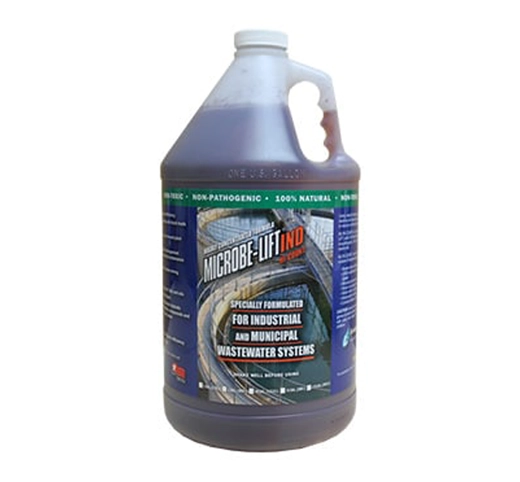
Microbe-Lift IND (industrial) is a highly active liquid culture consortium that degrades the organic compounds driving TSS in industrial and municipal wastewater, including FOG, phenols, proteins, surfactants, and chlorinated hydrocarbons. Other features include:
- Improves BOD and COD removal alongside TSS reduction, addressing all three parameters simultaneously rather than requiring separate interventions
- Resists pH shock loads and chemical upsets that crash native biological populations and cause TSS spikes
- Works in activated sludge systems, lagoons, aerobic and anaerobic digesters, and bio-towers
2. Microbe-Lift SA (Sludge Away)
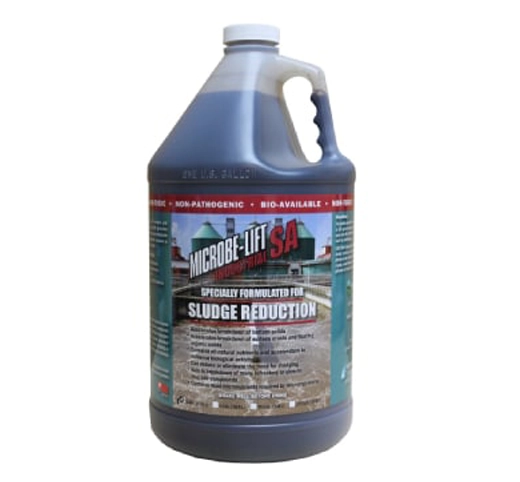
Microbe-Lift SA (Sludge Away) is a blend of humates, humic substances, and beneficial bacteria that promotes microbial oxidation of accumulated organic solids, directly reducing the sludge volume that displaces active treatment capacity and contributes to TSS carryover in effluent. Other features include:
- Effective across pH 4.0 to 10.0 and a wide temperature range
- Works in clarifiers, lagoons, ponds, lift stations, and treatment plants
- Non-toxic, non-pathogenic, no synthetic chemical constituents
Ready to Get TSS Under Control at Your Facility?
High TSS in wastewater is a compliance problem, an operational cost problem, and a treatment efficiency problem. All three problems compound when the organic load driving them goes unaddressed cycle after cycle.
Physical removal manages what is already there. Chemical treatment aggregates it for easier removal. Biological suspended solids reduction changes the rate at which organic solids form in the first place, and keeps changing it between applications, not just on dosing days.
Chemtech’s specialized and proven formulations are built for this application across municipal and industrial facility types, matched to the specific organic compounds and system conditions driving TSS in each case.
Explore our TSS reduction solutions or request a custom quote from our wastewater experts!
About Author

Neel Daphtary
Neel Daphtary is the President of Chemtech International. He oversees sales, distribution and business development. He excels at helping pharmaceutical and manufacturing firms find the right processes and environmental solutions. Neel is an active member of Global Philadelphia, an organization committed to community development in PA.


Have Any Questions Or Comments?
Call Us For Help!
888-709-8070