
Pharmaceutical packaging lines are the backbone of medication manufacturing, ensuring drugs are safely packaged, labeled, and prepared for distribution. These sophisticated systems integrate cutting-edge technology with proven methodology to meet industry demands for efficiency, accuracy, and regulatory compliance.
Quick Takeaways
- Modern packaging lines prioritize cleanliness, flexibility, and operator safety
- Custom solutions cater to product requirements and manufacturing processes
- Advanced automation enhances precision and reduces contamination risks
- Comprehensive quality control measures are integrated into the packaging process
- Design considerations include cleaning, quick changeovers, and ergonomics
Understanding Modern Pharmaceutical Packaging Lines
Today’s pharmaceutical packaging lines combine specialized components to create a seamless production flow. Let’s explore the key elements:
Automated Filling Systems
Advanced filling systems handle various products, from liquids in vials to powders in capsules. These systems are designed to maintain product integrity. Continuous operation boosts efficiency while reducing human intervention and contamination risks. Aseptic filling is one such automation system that uses sterilization and automation to ensure quality.
Aseptic Filling Systems and Tray Management
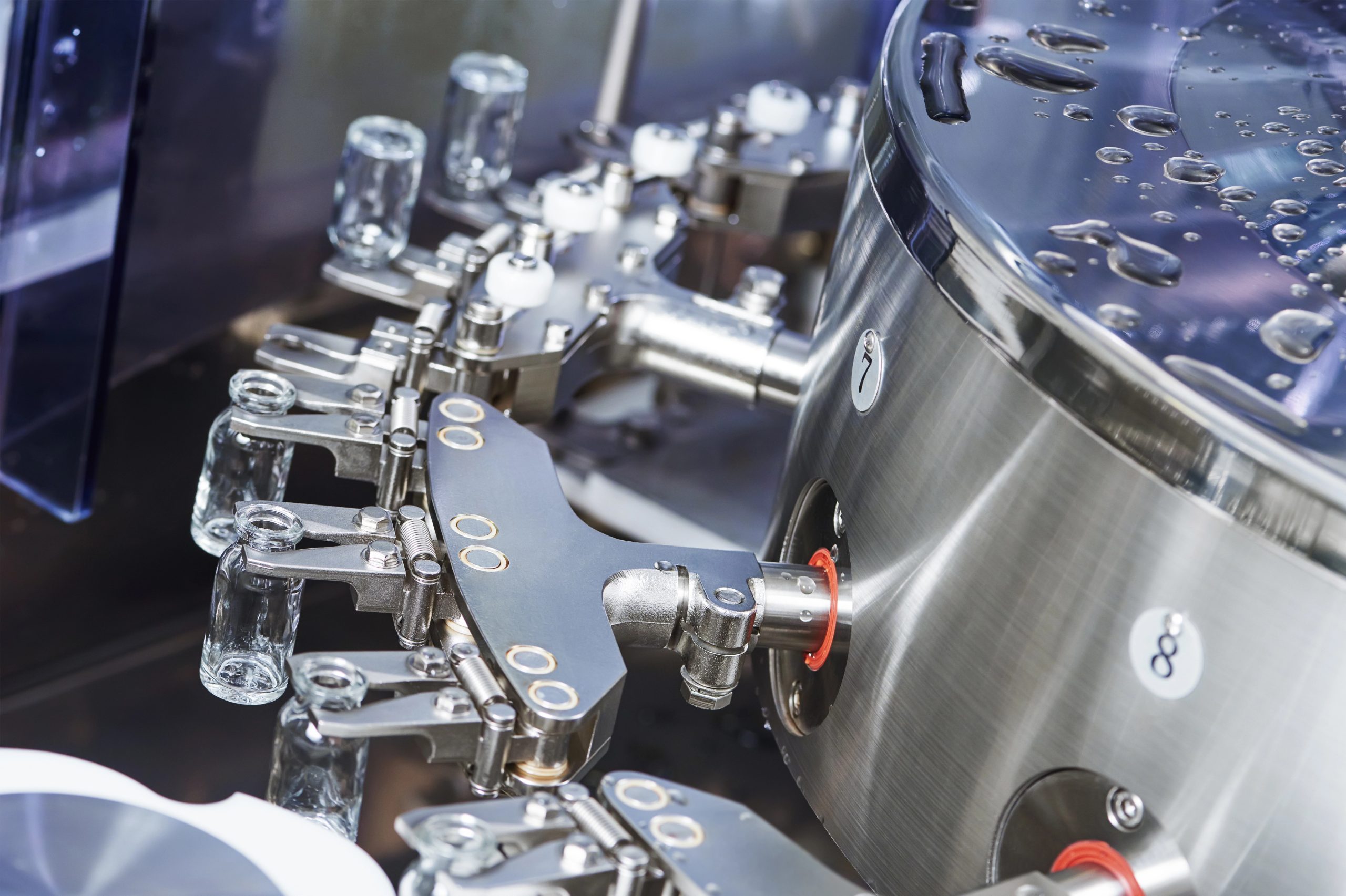
One innovation of modern packaging lines is the aseptic filling machine. These sophisticated systems automate filling pharmaceutical containers while maintaining a sterile environment. Key features include:
- Automatic sterilization of containers before filling
- Closed system design to prevent contamination
- Efficient filling of various product types (liquids, powders, etc.)
- Integration with conveyor systems for continuous operation
Complementing these machines are specialized tray systems:
- Vial Loading Trays: Feature grid-like structures for organized handling of multiple vials
- Horizontal Syringe Trays: Provide uniform storage conditions for syringes
- Custom Vacuum-Formed Trays: Offer stackable, secure transport solutions
These tray systems are crucial for maintaining product integrity throughout packaging and optimizing efficiency.

Primary Packaging Solutions
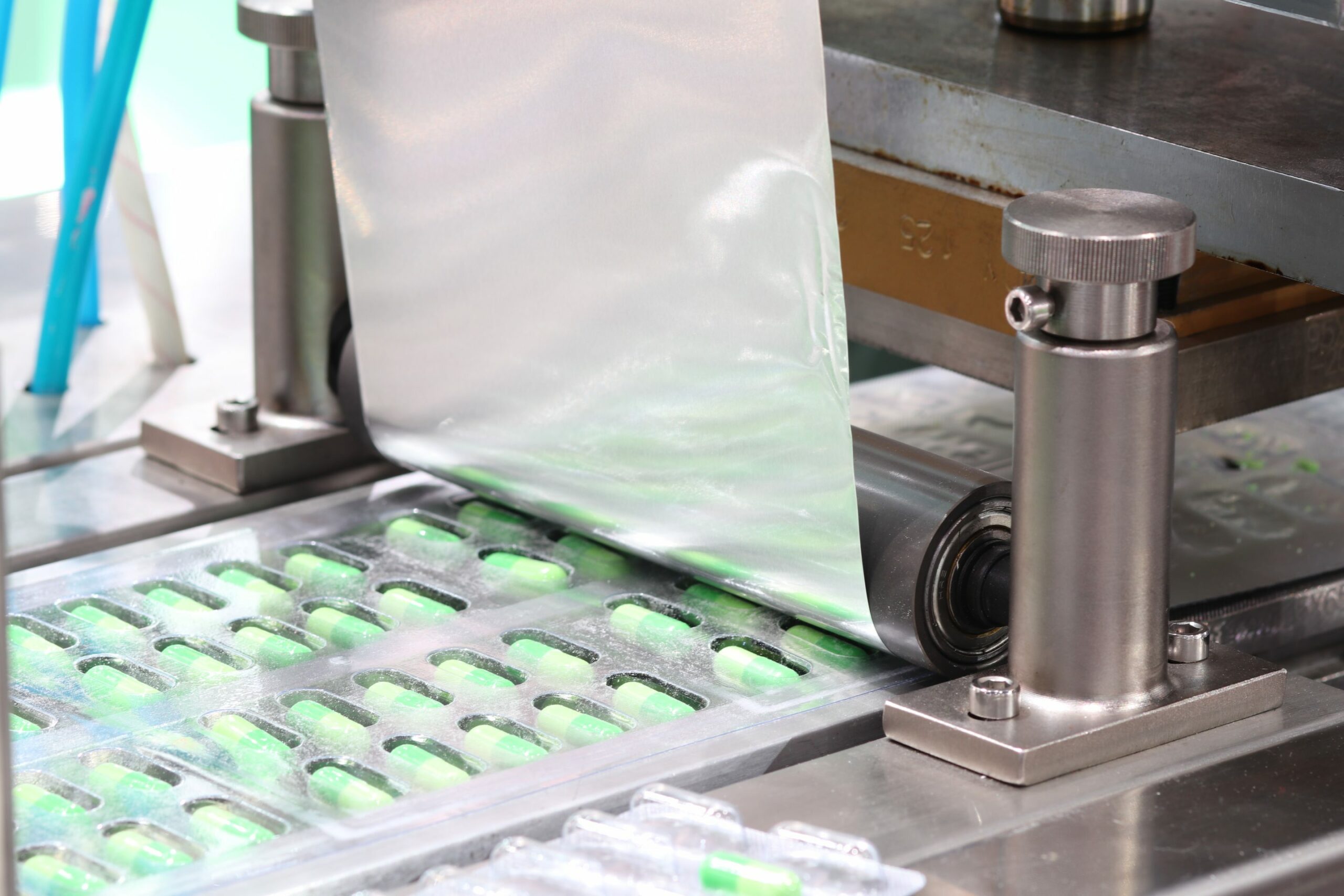
Primary packaging processes vary depending on the product type. Blister pack production is used for solid doses. Modern machines offer customizable designs and high-speed sealing, ensuring product protection and patient convenience.
For liquids and larger quantities, bottle, and vial packaging systems have evolved significantly. They now feature:
- Automated container handling and orientation
- Multi-head filling stations for precise dosing
- Advanced capping and sealing for tamper-evidence
These systems ensure package integrity without compromising the product.
Labeling and Identification Systems
Accurate product identification is a must. State-of-the-art labeling systems integrate with packaging lines, ensuring each product is correctly marked and traceable, as well as methods of storing that make labels easy to identify. These systems handle variable data printing for lot numbers and expiration dates while also supporting serialization for regulatory compliance.
Modern labeling systems use high-resolution digital printing technologies, allowing for on-demand label generation. This capability reduces the need for pre-printed label inventory and enables rapid changes to label information.

Quality Assurance Technologies
Quality control is woven throughout modern packaging lines. Advanced sensors and imaging systems perform continuous checks, including:
- In-line weight verification using high-precision load cells
- Visual inspection for packaging integrity using proper storage trays
- Contaminant detection using multiple technologies
These systems work together to maintain the highest product quality and patient safety standards. Many now incorporate artificial intelligence algorithms to improve defect detection accuracy over time.
Advanced Technologies Reshaping Packaging Lines
The pharmaceutical packaging industry continually adopts cutting-edge technologies to enhance performance and meet evolving challenges.
Robotics and Automation
Robotic systems have revolutionized pharmaceutical packaging, offering unparalleled precision and flexibility. Vial filling is one industry area that has greatly benefited from automation.
Robots minimize human contact with products, from delicate product handling to complex assembly tasks, reducing contamination risks. Automated guided vehicles streamline material flow within facilities, optimizing production logistics.
Artificial Intelligence and Data Integration
AI and machine learning are transforming packaging line operations. Predictive maintenance algorithms analyze equipment data to prevent downtime, while AI-powered inspection systems detect defects. According to Toward Packaging, the total global packaging AI market, including pharmaceutical packing, will increase from USD 2,021 million to USD 5,375.28 million by 2032. These technologies continually learn and adapt, driving ongoing process improvements and efficiency gains.
 Image Source
Designing for Safety and Compliance
Safety and regulatory compliance are important in the pharmaceutical realm. Modern packaging lines incorporate numerous features to meet these requirements.
Sterile Processing Environments
Today’s packaging lines often operate in cleanroom environments with advanced air filtration systems. Equipment design prioritizes easy cleaning and sterilization, with smooth surfaces and minimal crevices to prevent contamination.
Some packaging lines now incorporate isolator technology or restricted access barrier systems (RABS) to create localized sterile environments. These solutions offer greater flexibility and can be more cost-effective than traditional cleanrooms for certain applications.
Regulatory Adherence and Documentation
Compliance with industry standards is built into every aspect of modern packaging lines. Systems are designed to meet Good Manufacturing Practice (GMP) guidelines, with features like:
- Comprehensive audit trail capabilities
- Electronic batch records and digital signatures
- Validated control systems adhering to GAMP5 principles
These features ensure compliance and streamline the audit process, saving time and resources. Many systems now offer cloud-based documentation management, enabling real-time access to critical information across the organization.
Customization and Flexibility
The pharmaceutical industry’s diverse products require packaging lines capable of adapting to various needs. Many manufacturers now offer custom-built machines and modular systems that can be tailored to specific applications. This flexibility allows for:
- Efficient handling of different product formats
- Quick changeovers between batches
- Integration of specialized processes like kit assembly or filter packaging
Modular design principles are increasingly common, allowing packaging lines to be reconfigured or expanded as needs change. This approach reduces the need for complete line replacements, offering a more sustainable and cost-effective solution for manufacturers.
Enhance the pharmaceutical packaging line with Chemtech
The pharmaceutical packaging line combines precision engineering, advanced technology, and quality control. These systems ensure that medications reach patients safely by prioritizing cleanliness, flexibility, and regulatory compliance. As the industry continues to evolve, we can expect further innovations in pharmaceutical packaging, driving efficiency, safety, and product integrity improvements.
Is your packaging line ready for the future of pharmaceutical manufacturing? Consult with Chemtech to explore cutting-edge solutions tailored to your specific production needs.
About Author

Neel Daphtary
Neel Daphtary is the President of Chemtech International. He oversees sales, distribution and business development. He excels at helping pharmaceutical and manufacturing firms find the right processes and environmental solutions. Neel is an active member of Global Philadelphia, an organization committed to community development in PA.


Have Any Questions Or Comments?
Call Us For Help!
888-709-8070